Why an LCSW is the Ideal Partner for Your Child’s Mental Health Journey

Navigating the emotional and behavioral challenges of a child can feel overwhelming for many parents. It is often difficult to understand what is truly behind a child’s anxiety, mood changes, or behavioral reactions, especially when different explanations and opinions come from various specialists or systems.
Many families experience a fragmented approach where a child’s difficulties are viewed in isolation, without fully considering their everyday environment. This can lead to frustration when support does not translate into meaningful improvements at home or at school. In reality, understanding the full context of a child’s life is often the key to meaningful progress.
Licensed clinical social workers, in particular, take a comprehensive, family-centered approach to pediatric therapy, focusing on the child’s overall environment and addressing their needs in a holistic and practical way.
Understanding a Child Beyond the Behavior
When a child struggles emotionally or behaviorally, it is important to look beyond the surface. Behavior is often a form of communication rather than a problem on its own.
A child’s reactions are usually influenced by what is happening around them — at school, at home, or within friendships. Stress, changes in routine, or emotional pressure can all affect how a child expresses themselves.
Instead of focusing only on “fixing” the behavior, it is more helpful to understand what the child might be feeling or experiencing underneath it.
Why Environment Matters So Much
A child does not exist in isolation. Their emotional world is shaped by everything they interact with every day — family dynamics, classroom environment, friendships, and even daily routines.
When parents start to observe patterns in these environments, it becomes easier to understand why certain behaviors appear. For example, anxiety might increase in situations where a child feels pressure, uncertainty, or lack of emotional safety.
By focusing on environment rather than labels, parents can respond in a more supportive and constructive way.
Building Emotional Awareness in Children
Helping a child understand their emotions is one of the most powerful tools for long-term development. When children can identify what they feel and why they feel it, they begin to develop stronger emotional regulation skills.
Simple conversations, consistent support, and safe emotional expression at home all contribute to this process. Children learn best when they feel understood rather than judged.
This is also where stories, books, and guided discussions can play an important role in helping children connect emotions with real-life situations in a safe and accessible way.
Supporting the Child in Their Real Life Context
Effective support always considers the child’s real-life environment. What happens at school, how the child feels at home, and how they interact with others are all part of the same emotional system.
When these areas are understood together, parents and caregivers can create more stable and supportive conditions for the child’s development.
The goal is not to isolate a single problem, but to understand the full picture and respond in a way that supports the child as a whole person.
Every child experiences emotional challenges differently, but one principle remains consistent — understanding the environment often leads to a better understanding of the child.
When parents look at behavior through the lens of context, connection, and emotional needs, they are better equipped to support their child in a meaningful and lasting way.
More articles
How to Teach Emotional Intelligence to Kids at Home (Step-by-Step Guide for Parents)
“Why Does My Child Overreact Over Everything?” You asked them to turn off the TV. Five minutes later, there are tears, slammed doors, and a full-scale meltdown — over a cartoon. Or maybe it’s the opposite: your child shuts down completely when something goes wrong, refusing to talk, unable to explain what they’re feeling. If […]
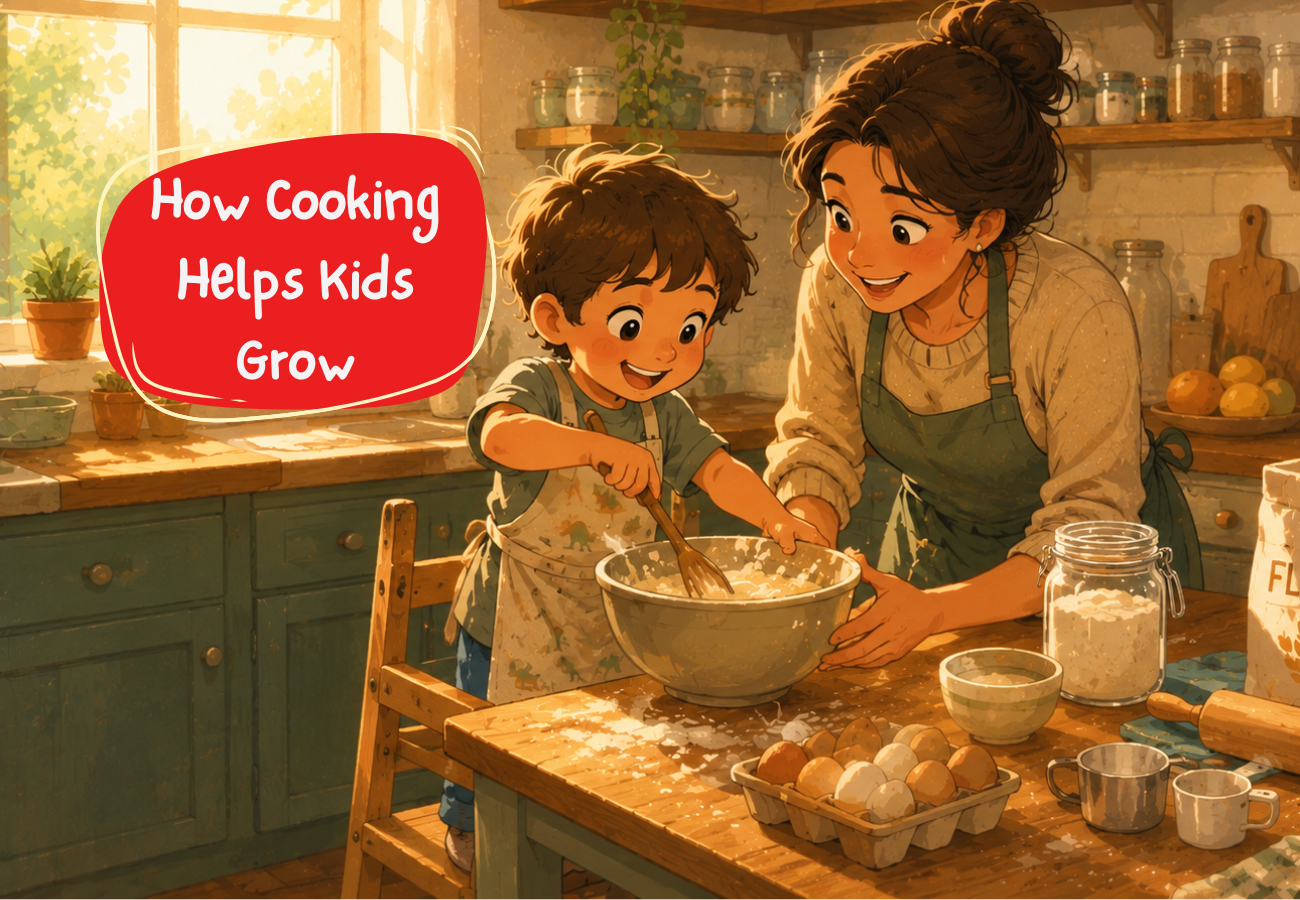
Creativity, motor skills, and sociability: these are the advantages of introducing your kids to cooking
Some of the best family memories happen in the kitchen. Flour on the counter, a kid proudly stirring something that smells incredible, a mess that somehow doesn’t matter — these moments are small, but they add up. Cooking together is one of those rare activities that’s genuinely fun for kids and quietly powerful for their […]

How to Raise a Book Lover: Simple Habits That Make Reading Stick
Raising a child who genuinely loves reading is one of the most rewarding gifts a parent can give. It is also one of the most misunderstood. Many parents assume that reading is something children either naturally take to or don’t, but research and lived experience tell a different story. A love of books is built. […]