Positive Thinking for Kids: How It Affects Our Lives and Helps Children Grow

How Does Positive Thinking Affect Our Lives?
Positive thinking transforms our view of the world, directly influencing emotional well-being, relationships, and even physical health. It builds resilience, helps us manage stress, and creates a sense of hope and optimism. For children, optimistic mindset fosters self-confidence, strengthens emotional intelligence, and prepares them to handle life’s challenges.
The Power of Positive Thinking for Kids
An optimistic mindset is a powerful tool that helps children develop resilience, which is essential for tackling obstacles and managing emotions. Through positive thoughts, kids can learn to focus on solutions rather than problems, which promotes growth and perseverance.
How to Encourage Positive Thinking in Kids
Instilling a habit of positive outlook in children can have a lasting impact on their mental health. Here are a few ways to encourage positive thinking in kids:
- Positive Affirmations for Kids
Teaching children to repeat affirmations helps them build a positive self-image. Simple phrases like “I am capable” or “I can learn from mistakes” can significantly change how they perceive themselves. Studies have shown that affirmations foster self-belief and resilience in children. - Gratitude Practices
Encourage kids to keep a gratitude journal or say three things they are thankful for dayly. This activity redirects their focus to positive aspects of life, improving their mood and outlook. - Model Positive Thinking
Children learn by observing adults. Model a positive attitude by speaking optimistically about challenges and setbacks. - Use Positive Thinking Activities for Kids
Engage children in activities that promote resilient mindset, such as role-playing scenarios where they imagine overcoming difficulties or creating “positivity jars” where they add notes of good things that happened each day. - Optimistic Quotes for Kids
Inspire children with quotes that emphasize positivity. Display quotes around the house or in their study areas to keep them motivated.
While we focuse on a generally optimistic outlook, affirmations are specific statements that reinforce confidence and self-worth. Using both strategies can help children cultivate a balanced mindset, teaching them to view challenges as opportunities for growth. For more on morning affirmations tailored for kids, you can explore our article on morning affirmations for kids.
Positive Thinking Activities for Kids
Here are some practical activities that make positive thinking fun and engaging:
- Positive Reflection Time: Each day, ask children to share one thing that made them happy or something they did well.
- Kindness Challenges: Encourage children to perform one act of kindness daily. This not only boosts positivity but also teaches empathy.
- Visualization Exercises: Guide children to imagine themselves succeeding in various scenarios, helping them develop a proactive mindset.
Another way to introduce children to the benefits of positive thinking is through engaging video resources. This video on positive thinking is a great tool to help kids understand how a positive mindset can transform their day-to-day experiences.
Positive Thinking vs. Positive Affirmations: What’s the Difference?
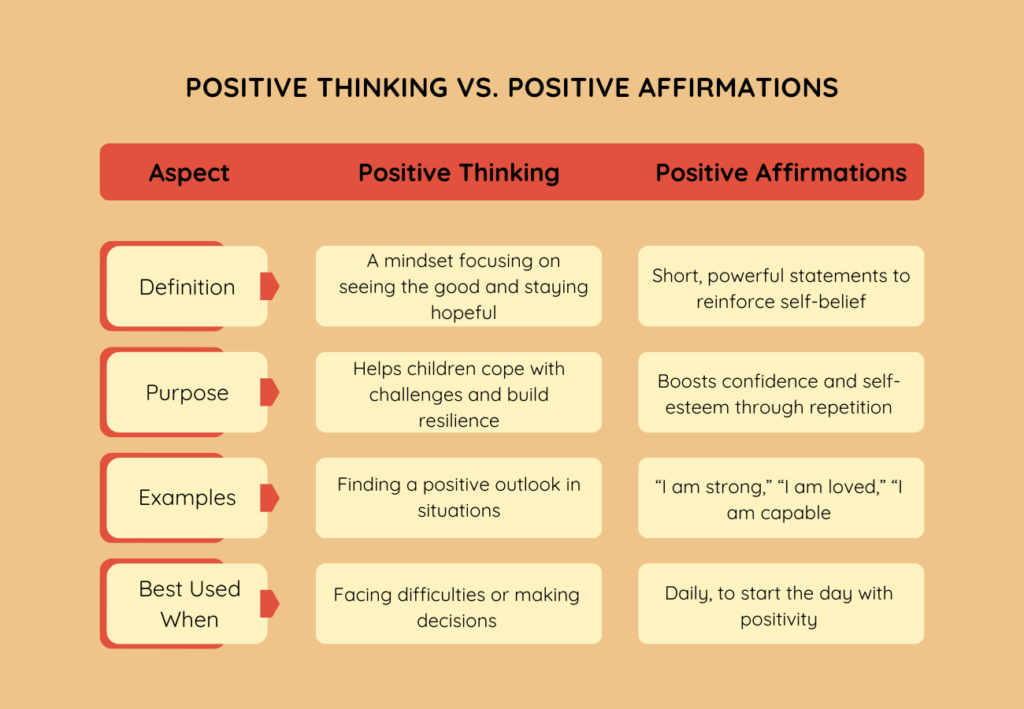
By integrating these techniques into daily life, you help children develop an optimistic mindset, a skill that will support them as they grow.
For more insights and resources on fostering confident approach and emotional well-being in children, visit trusted sources like the American Academy of Pediatrics or Mental Health America.
More articles
From Storytime to Social Skills: How Everyday Home Life Builds Emotional Intelligence in Children
Emotional intelligence—the ability to recognize, understand, and manage emotions—is one of the most important skills a child can develop. While schools and structured activities play a role, the foundation of emotional intelligence is built much closer to home. Everyday interactions, routines, and seemingly small moments within family life shape how children perceive themselves and others. […]
How to Build Emotional Vocabulary at Home: A Complete Guide for Parents
Helping children develop emotional vocabulary is one of the most valuable gifts parents can give. When kids can name and understand their feelings, they are better equipped to manage emotions, communicate effectively, and build strong relationships. Imagine a toddler frustrated because a toy broke—if they can say “I’m sad” or “I’m disappointed,” the moment shifts […]
A Teacher And Mom’s Perspective On Growing Emotional Intelligence In Children
Have you ever asked yourself, “How do I help my child understand their feelings and handle them in a healthy way?” If yes, you’re not alone. As a teacher and a mom, I’ve heard this question from parents in school meetings, in casual chats, and even during pick-up time. The good news is, emotional intelligence […]