One of the virtues to cherish is empathy. You may think that compassion benefits mostly those who need it, but that’s wrong.
First, compassionate people are more welcomed in every company. They are loved and respected because everyone wants to have a friend to turn to at difficult times.
Second, empathy is a result of deep mindfulness. That means that we aren’t born emphatic. We reach that level only after having obtained some life experience. So, an empathic person is a person who already has other virtues, such as:
- kindness;
- sincerity;
- humaneness;
- honesty:
- generosity;
- responsiveness, etc.
Emphatic people have some skills professional psychologists possess. The Empathy in Toddlers research claims that kids first need to understand their own emotions to be compassionate towards others` ones. The better they deal with their own ones, the more level of empathy they demonstrate.
See, empathy is a whole complex of virtues and skills that make us a better version of ourselves. Why not teach it to kids right now?
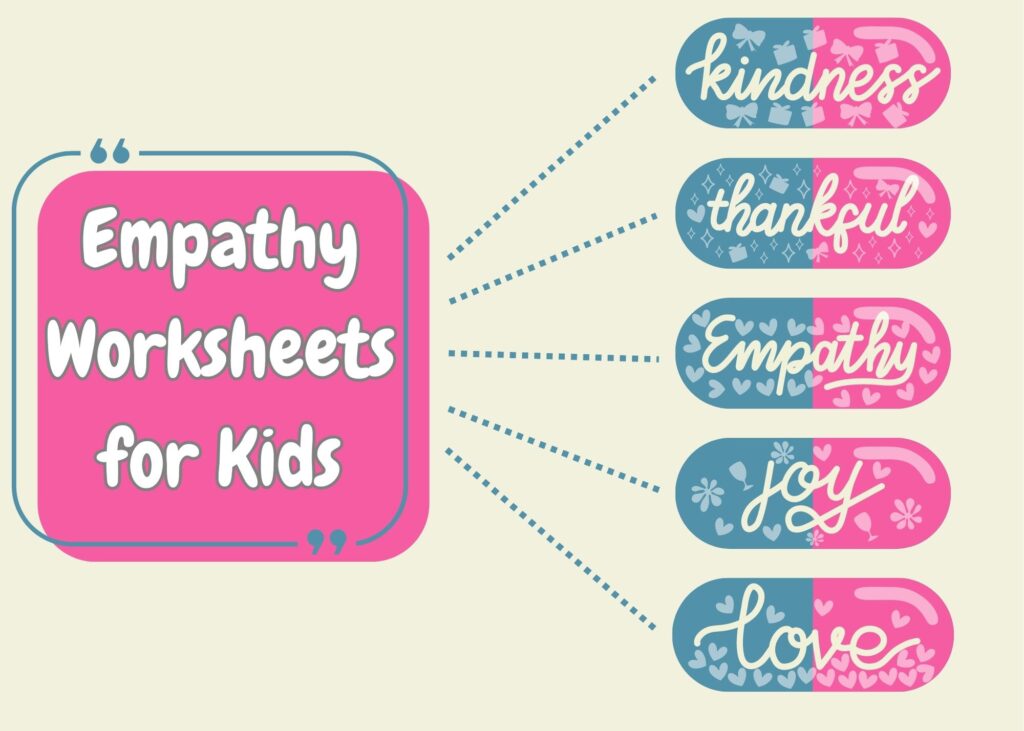
Empathy Worksheets
To reinforce these exercises, books like Kindness is My Superpower and Listening is My Superpower offer stories that teach children to understand emotions, practice attentive listening, and show compassion toward others.
You can`t make a kid sit in front of you, his attention is fully paid to empathy. You`ll also fail to teach him by telling him empathy is good.
All he needs is experience. A toddler or preschooler doesn’t have so many opportunities to see other people’s misfortunes and work out empathy towards them. But you can immerse your little one into it by giving him an empathy worksheet. There are such advantages of empathy worksheets for kids as;
- it is entertaining;
- develop creativity;
- boost critical thinking;
- improve motor skills;
- teach values, etc.
A downloadable worksheet on empathy includes different kinds of activities. Kids are generally asked to:
- match the columns;
- draw something;
- paint the picture;
- fill the gaps;
- do word quizzes;
- choose the odd words or options among the right ones;
- write down some opinions, etc.
It not only develops compassion but also extends kids` creativity, logic, and imagination. Toddlers and preschoolers can work on an empathy worksheet pdf for hours, being sincerely interested in it.
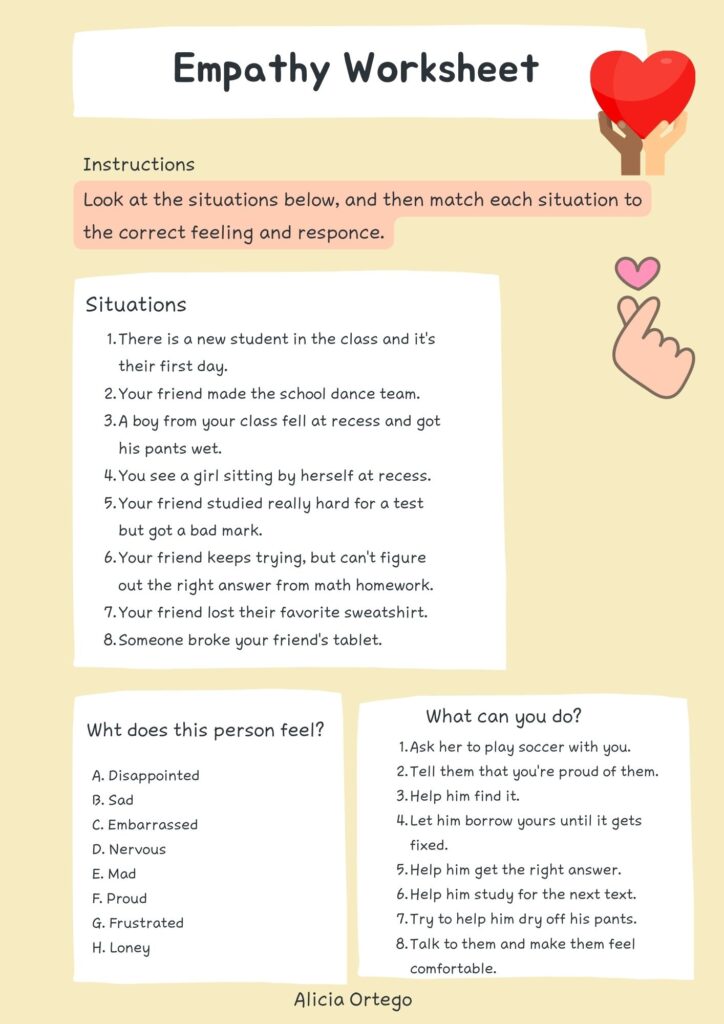
Look at these two worksheets that teach kids to differentiate emotions and help their peers deal with them.
Free Printable Empathy Worksheet PDF
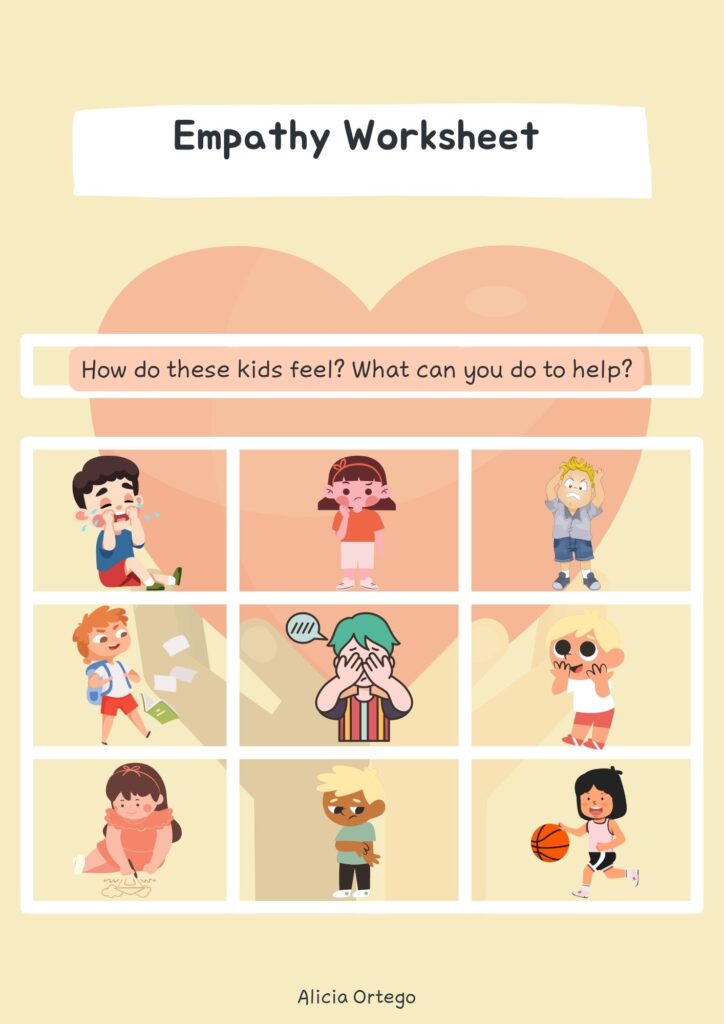
Why do empathy worksheets really work?
It demonstrates to children the basics and gives them a chance to model some real-life situations. Next time a kid, having worked on an issue on his worksheet, will know how to support his friend. So, it’s like a simulator that provides room for working out on your emotions and dealing with them for the sake of others.
You know how beneficial empathy can be, so offer empathy worksheets pdf to your child, and his attention will be focused on it for many hours.
Conclusion
It doesn’t matter how empathy worksheets for elementary students are designed and how many interesting activities they offer. You need to practice being kind and compassionate. That’s donating toys to charity, letting kids cheer other kids up, making presents and just saying a good word. Yet, a downloadable worksheet on empathy can lay the foundation for future hands-on experience.
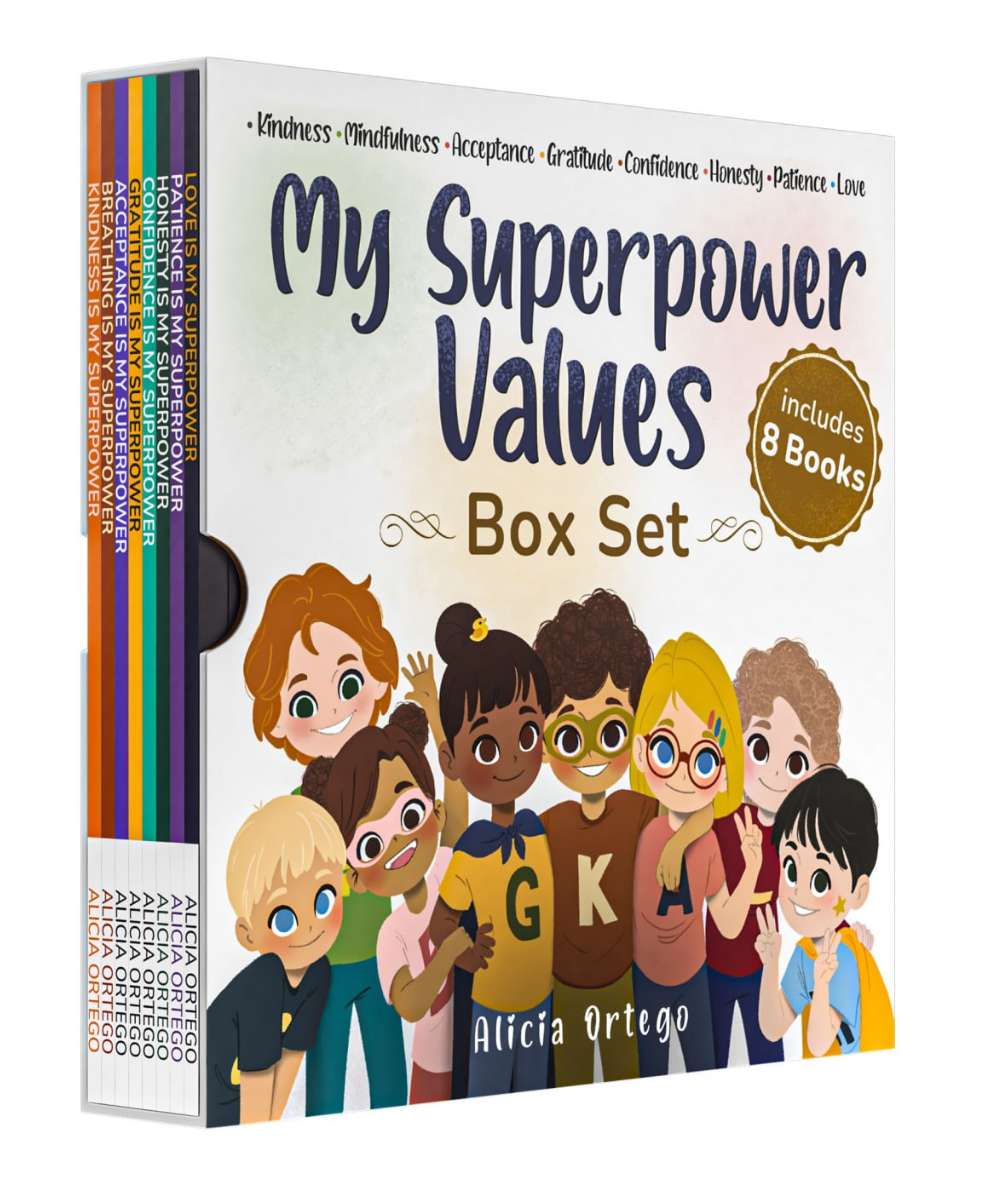
For parents looking for engaging ways to cultivate empathy and kindness, the My Superpower Books Box Set provides eight interactive stories that help children practice compassion, understand emotions, and develop social-emotional skills in fun and meaningful ways.
More articles

50 Creative Reading Rewards Ideas That Motivate Kids to Love Books
Every parent and teacher of a reluctant reader has wondered the same thing: should I reward my child for reading? If rewards are done badly, they turn books into a chore you get paid for. However, when they are done well, they give kids the push they need until reading becomes its own reward. This […]
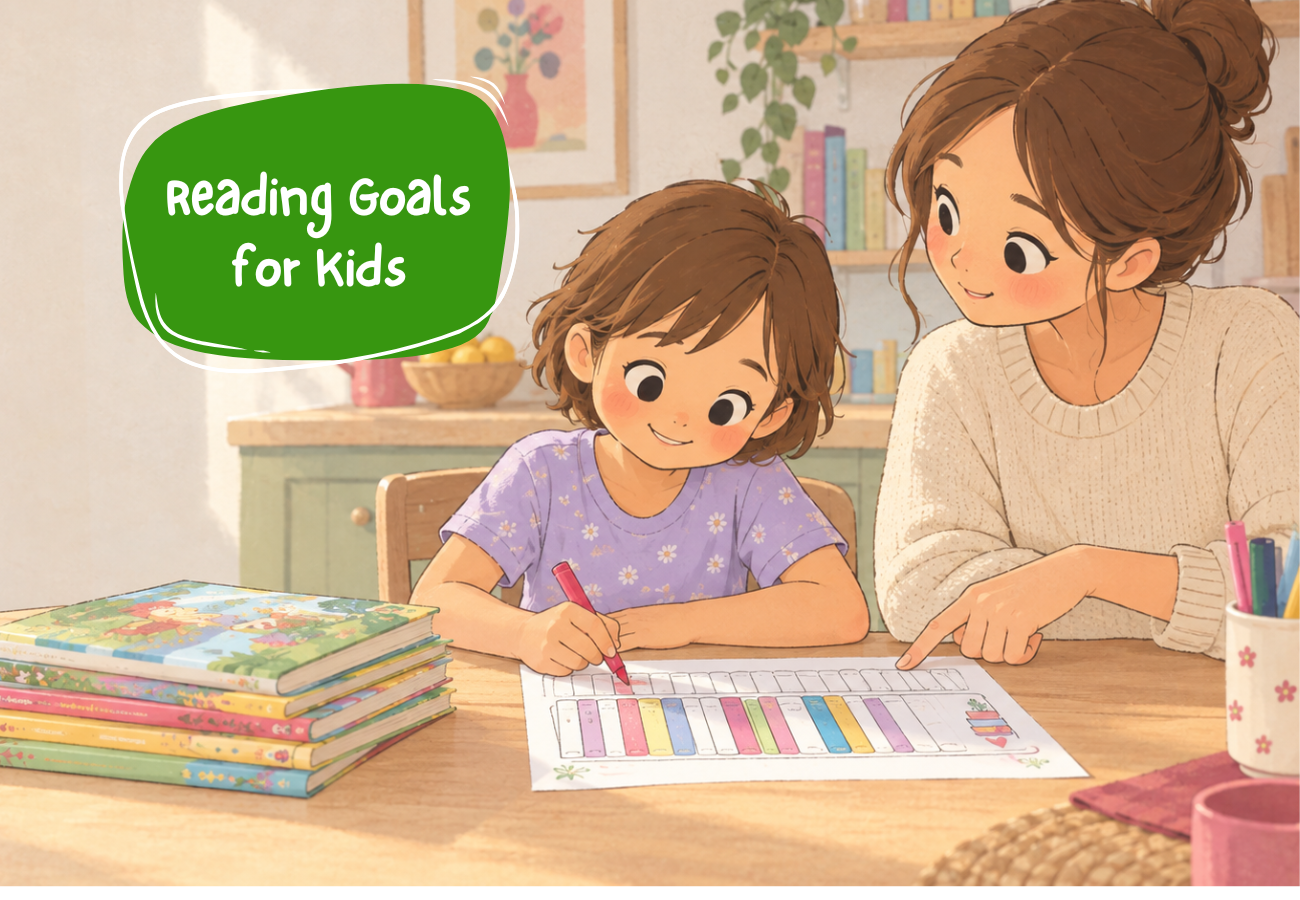
Reading Goals for Kids: 50 Fun Reading Challenges to Build Lifelong Readers
“Read more” is the most common reading advice a child hears, and the least useful. It has no starting point, no finish line and no moment where anyone gets to say “you did it.” A reading goal fixes that. It turns a vague wish into something a child can picture, count and celebrate. This guide […]
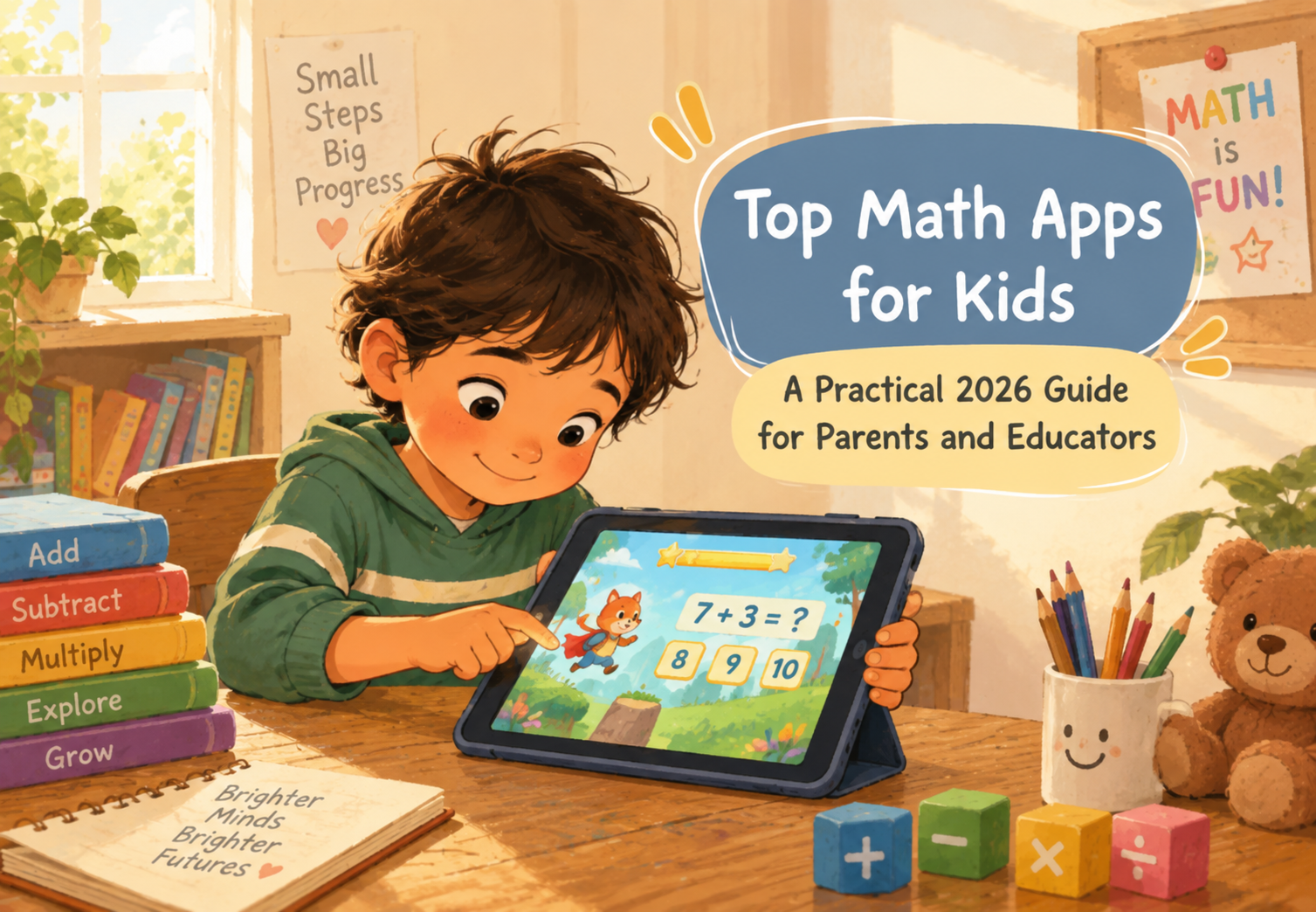
Top Math Apps for Kids: A Practical 2026 Guide for Parents and Educators
Finding a good math app for your child sounds simple until you actually start looking. Some apps are little more than worksheets dressed up with cartoons and rewards. Others are entertaining games where the educational part feels like an afterthought. The best math apps for kids sit somewhere in the middle: children genuinely want to […]