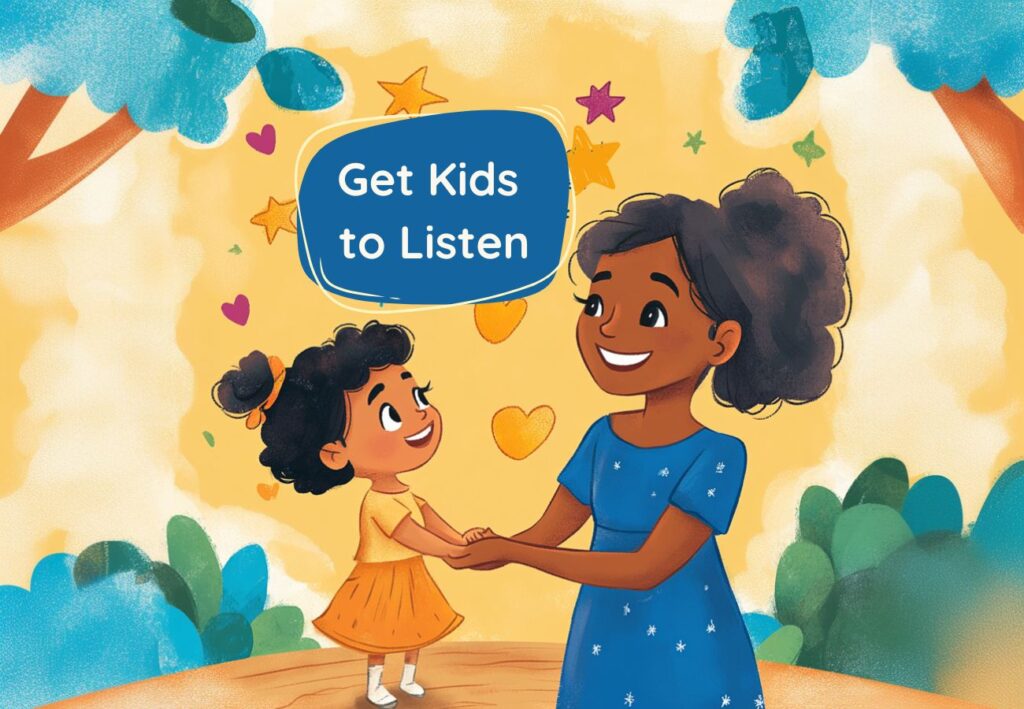
Ever feel like you’re talking to a brick wall when trying to get your toddler or 6-year-old to listen? You’re not alone. Many parents struggle with how to get kids to listen the first time without yelling or repeating themselves endlessly. The good news? Listening is a skill that can be taught with the right strategies. In this article, you’ll discover 10 respectful and effective ways to make kids listen — from preschoolers to kindergarteners and beyond.
1. Get on Their Level . Want to know how to make a 3-year-old listen? Start by getting down to their eye level. This simple act shows respect and ensures they feel seen and heard. When you speak face-to-face, children are more likely to pay attention and understand what you’re saying.
2. Say Their Name First Before giving an instruction, say your child’s name and wait for eye contact. Whether you’re dealing with a 4-year-old or a 7-year-old, this helps break distractions and prepares their brain to listen.
3. Use Fewer Words Young children, especially toddlers and preschoolers, can get overwhelmed by too many words. Keep your instructions short and clear. Instead of saying, “Please go to your room and pick up all the toys, then come set the table,” try, “Pick up your toys now.”
4. Make It Fun If you’re wondering how to get a 6-year-old to listen, turn your request into a game or challenge. Try saying, “Can you pick up the toys before the timer rings?” Kids respond better when the task feels like play.
5. Offer Choices When kids feel in control, they’re more likely to cooperate. Offer two acceptable choices: “Do you want to brush your teeth first or put on pajamas?” This strategy works wonders for toddlers and older children alike.
6. Follow Through With Calm Consistency What to do when kids don’t listen? Calmly follow through with consequences. If you’ve said it’s time to leave the park in 5 minutes, stick to it. Consistency builds trust and respect.
7. Use Positive Language Instead of saying, “Don’t run,” try, “Please walk.” Positive instructions are easier for young minds to follow. Plus, they create a more encouraging tone.
8. Create Routines and Signals Predictability helps kids know what to expect. Establishing routines —especially in the morning or bedtime — reduces the need for constant reminders. Visual charts or songs can help preschoolers and kindergarteners stay on track.
9. Model Good Listening Children learn by example. Show them how to listen by giving them your full attention when they talk. Put away your phone, make eye contact, and respond thoughtfully.
10. Connect Before You Direct Before asking your child to do something, take a moment to connect. A quick hug, a smile, or a shared laugh can go a long way. When kids feel connected, they’re more willing to cooperate.
Bonus Tip: Use “My Superpower Books” Teaching listening skills is easier with engaging stories. “My Superpower Books” introduces kids to emotional intelligence, respect, and the power of listening — all in a fun, relatable way. It’s a great tool for parents and teachers looking to build character from the inside out.
Helpful Resources
More from Alicia Ortego: How to Teach Kids to Read
Learning how to get kids to listen doesn’t have to mean raising your voice or feeling frustrated. By using respectful, consistent, and engaging strategies, you can teach your child to listen the first time. Try these tips, share the article with fellow parents, and don’t forget to explore our My Superpower Books for more character-building fun. Got your own listening tip? Leave a comment below!
More articles

Summer Camp Safety: How to Know If Your Child Will Be Protected
Most child harm happens at the hands of someone the child already knows and trusts, and a significant share of sexual abuse involving minors happens between young people themselves. Those facts can make any parent think twice about camp safety. On top of that, not every camp meets the standards families might expect, and some […]
How to Prepare Your Child Emotionally for Back to School (+ Best Back to School Books for Kids)
Back to school is often painted as an exciting milestone—new backpacks, fresh notebooks, new friends. But for many children (and parents), it also brings something less talked about: uncertainty, worry, and emotional overwhelm. If your child suddenly becomes more clingy, quiet, or irritable as the school year approaches—you’re not alone. Back to school anxiety in […]
From Storytime to Social Skills: How Everyday Home Life Builds Emotional Intelligence in Children
Emotional intelligence—the ability to recognize, understand, and manage emotions—is one of the most important skills a child can develop. While schools and structured activities play a role, the foundation of emotional intelligence is built much closer to home. Everyday interactions, routines, and seemingly small moments within family life shape how children perceive themselves and others. […]