Human beings experience emotions every day, and children are no exception. We are all different. Some of us may jump over the moon having the coolest gift ever, while others may only flash a smile. That’s because we have different temperaments. Still, we express emotions each time we experience something.
How to Recognize Emotions with Kids Emotion Chart?
Sometimes, adults fail to define their moods and the emotions they feel. If it is hard for us to understand ourselves, children have double the trouble talking about their inner world. Fortunately, there are lots of tools to explain basic things. A feelings chart for children is exactly what you need. And the best news is that you don’t need anything special to start using it immediately.
Do Kids Need to Explain Emotions?
A child should define his emotional state for a reason. Kids tend to show their moods in a non-polite way. They are moody or whiny, and it is bad. To deal with the problem, you should know its “name”. Therefore, it would be better if a kid says, “I am disappointed because my parents make more time for my sister than me”. The keyword here is disappointed. Explain each emotion with a “how are you feeling chart”. It’ll help kids in the long run.
All feelings are a result of something. To understand the trigger that evokes feelings, a child has to give it a name. Is it jealousy, self-disappointment, fear, or shame? It is a complex topic. You should do your best to explain it on a very easy level. You may use a simple printable poster with examples of feelings. Let me show you how it works.
Free Printable Coloring Feelings PDF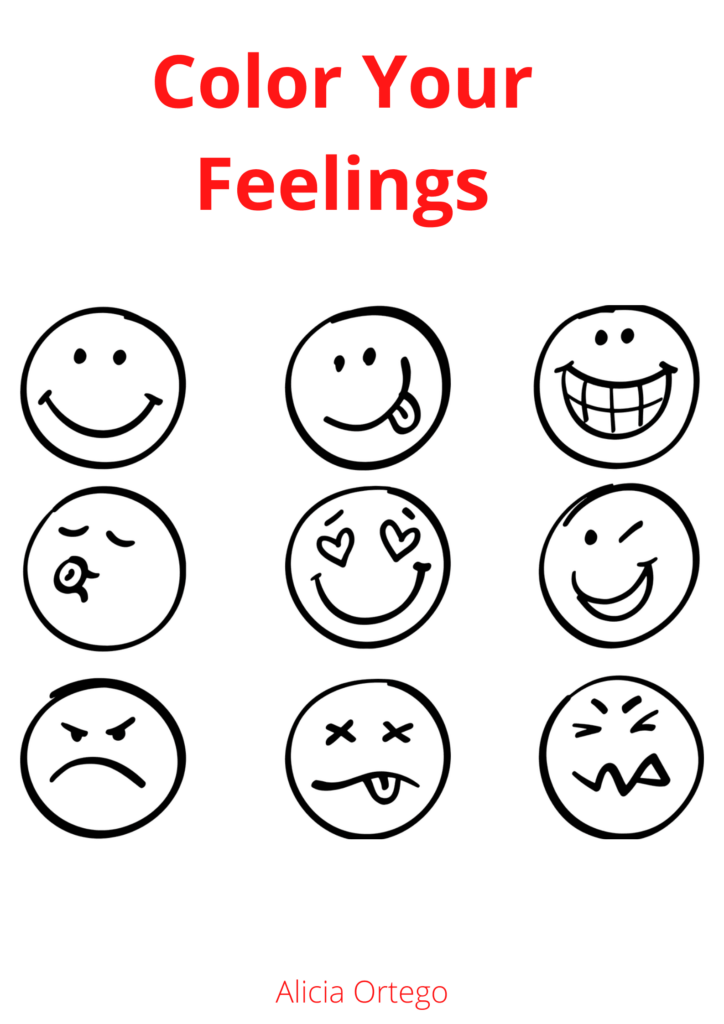
List of Feelings for Kids
Start small, especially if you have a toddler. The basic feelings are:
- Joy;
- Anger;
- Sadness.
It is a very short list. But it is quite enough to start with. Your child should be ready to describe those notions and substantiate the feelings he has. For example, I feel joy because we had a walk in the park, and I liked it.
Then, it’s time to complicate the task because feelings have shades. A sad person can be:
- depressed;
- crushed;
- desperate;
- upset, etc.
A person who has joy can feel:
- optimistic;
- loving;
- amused;
- delighted, etc.
An angry person can be:
- annoyed;
- furious;
- irritated, etc.
The question arises: how do we explain it all to children? You need to exemplify all points. A feelings chart for kids will help you here.
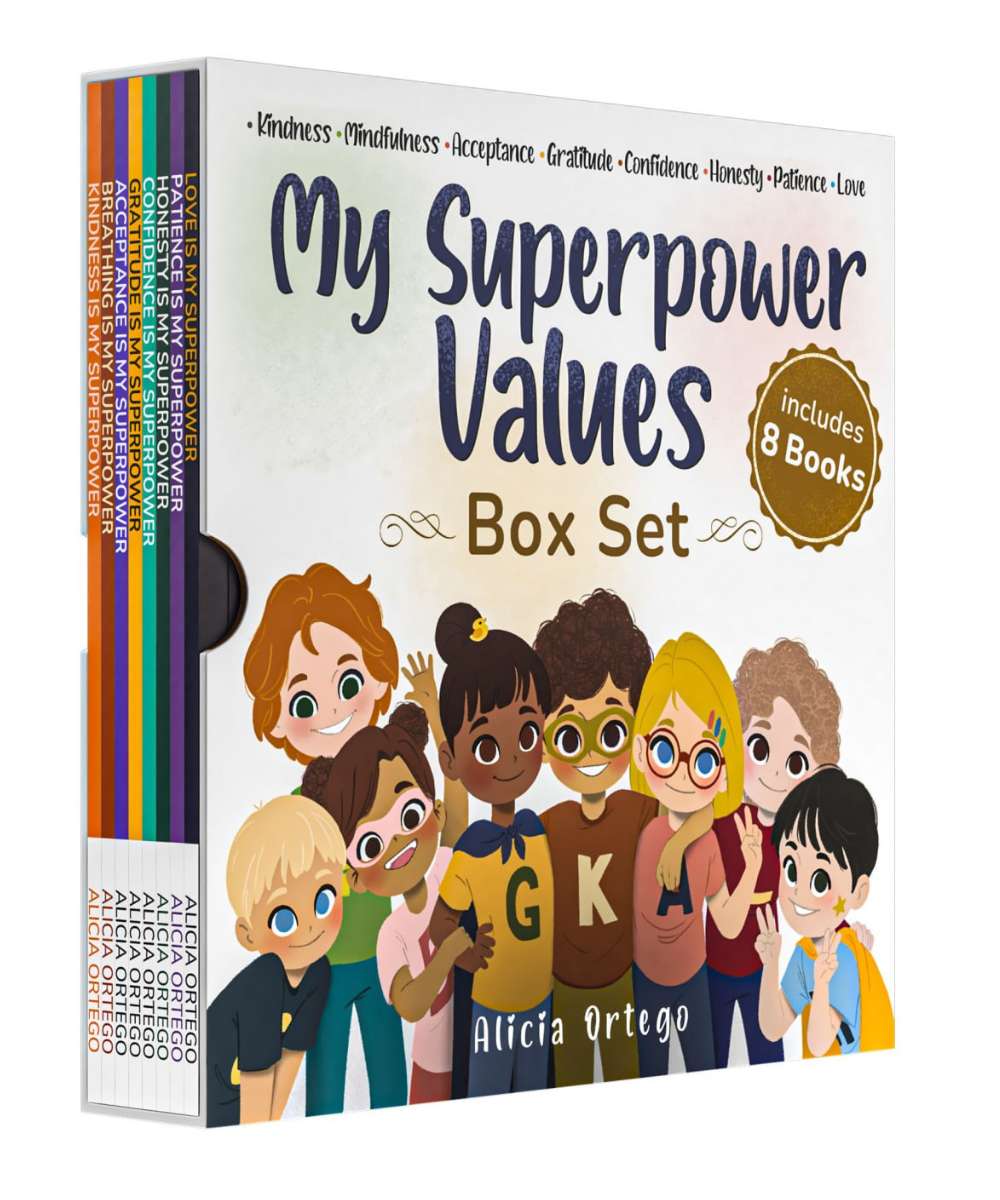
Expressing your emotions via color is a very fun activity. Try reading “Kindness is My Superpower” and ask kids to draw their feelings.
Emotion Face Charts
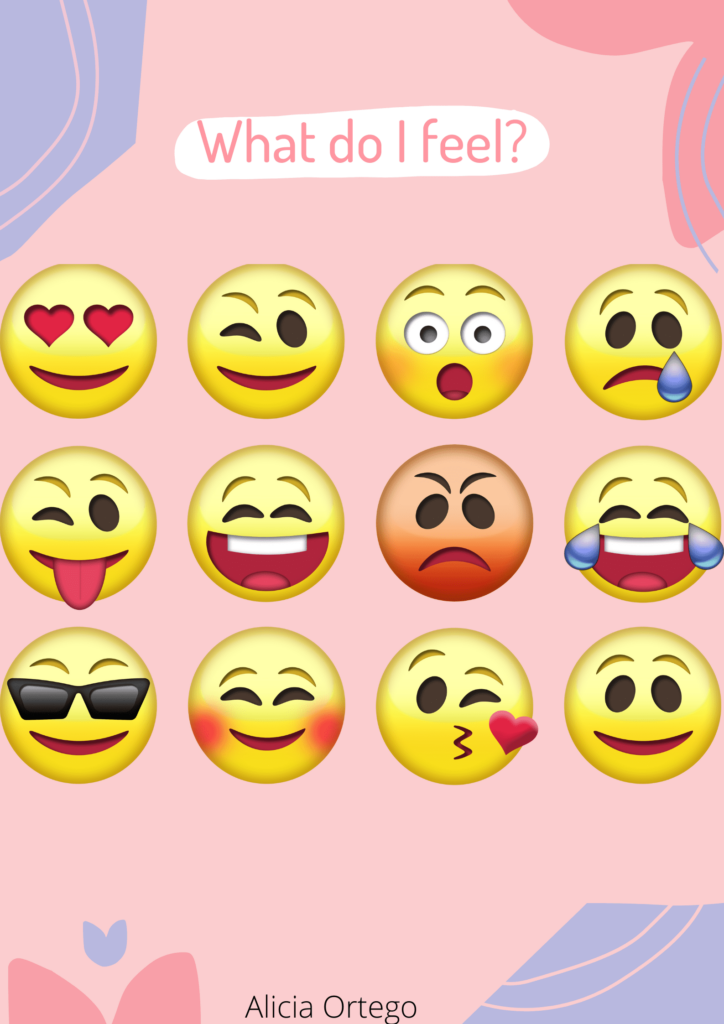
It is a printable poster for preschoolers and older kids. One can see the facial expressions of different people. Each feeling has its name, such as shy, peaceful, happy, etc.
One may choose different designs and difficulty levels (for different ages). When done, print the emotions chart pdf that you like. Some posters are black and white so that children can practice coloring feelings. But looking at the emotion faces chart is not enough. It is better to use it as a game tool.
As a fun exercise, ask children to point to smiley faces to describe what empathy feels like.
- What Do I Feel? Begin each morning by checking your child’s emotions. Offer to look at the chart and then tell him his own emotion. Then, ask a kid what that emotion means. It is a very good family bonding activity that helps to establish trust between you and your children.
- The activity above is also great for learning about and setting personal boundaries.
Free Printable “What do I feel” PDF
- Name the Feelings. The fastest way to learn all the stuff is to repeat it. Every time you see your child is happy or irritated, tell him about it. I see you are happy, or it seems to me that you are angry. Ask why it is so. Then, offer a child to guess what his facial expression made you come to such a conclusion.
- Puzzle it out. Start a game, the task of which is to guess the emotions passers-by have. By the way, it is a good activity when in a traffic jam. Remind a child to explain his position.
Conclusion
A printable mood chart with faces is a powerful tool to explain complex concepts. It is also a powerful tool for your kids to overcome growth mindset challenges. You will not believe how fast your children can make it. Plus, your communication with them will become more productive and meaningful. Download a printable kids’ emotion chart above and check whether it is true. It’s going to work, trust me.
More articles

10 Best Social-Emotional Learning Books for Kids (Used by Teachers & Parents)
Ask any teacher what’s changed most in classrooms over the past decade, and you’ll hear the same answer: kids need more than academics. They need to know how to handle frustration without melting down, how to include someone who’s been left out, how to say “I’m sorry” and mean it. Social-emotional learning isn’t a trend […]
How Teachers Can Use Storybooks to Build Social Skills in the Classroom
Every teacher knows the moment. Two kids arguing over a pencil, and suddenly the whole lesson is derailed. Or a child sitting alone at lunch because no one thought to include them. These aren’t dramatic crises — they’re the small, everyday moments where social skills either show up or don’t. And yet, teaching those skills […]
Why an LCSW is the Ideal Partner for Your Child’s Mental Health Journey
Navigating the emotional and behavioral challenges of a child can feel overwhelming for many parents. It is often difficult to understand what is truly behind a child’s anxiety, mood changes, or behavioral reactions, especially when different explanations and opinions come from various specialists or systems. Many families experience a fragmented approach where a child’s difficulties […]