What Happens to Self-Esteem When Kids Hit Learning Walls

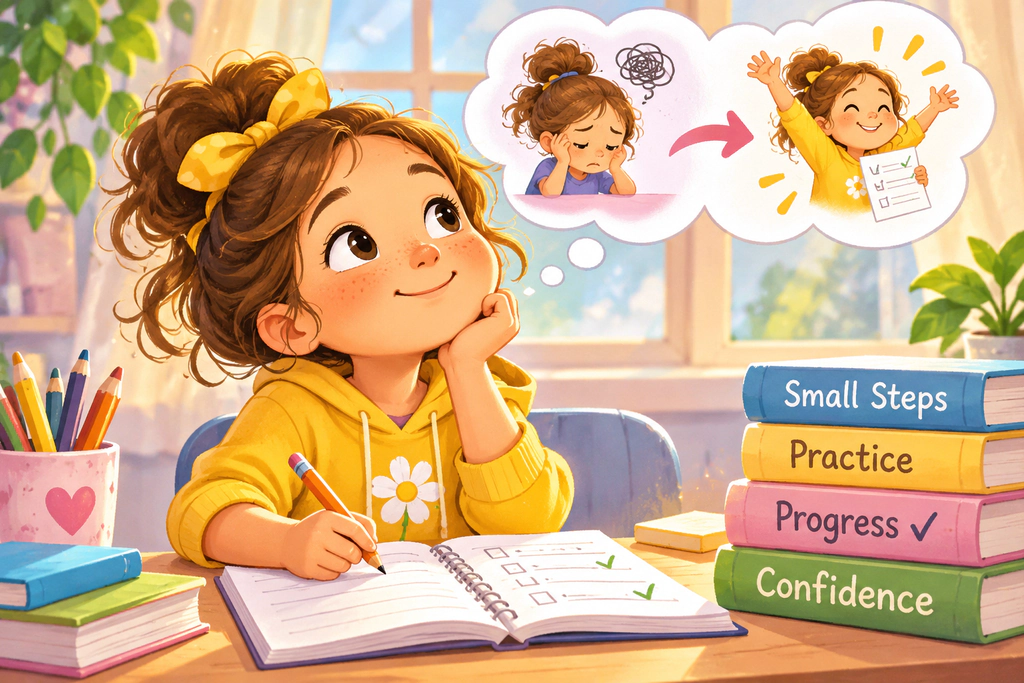
A difficult school assignment can affect much more than a child’s grade. When repeated effort leads to confusion, kids may begin to doubt their intelligence, avoid challenges and assume that future attempts will end the same way. These learning walls are common, but the beliefs children form around them can last longer than the academic struggle itself.
Parents and caregivers can protect a child’s self-esteem by noticing subtle changes, responding calmly and making progress feel possible again. The aim is to help children see difficulty as a temporary problem they can work through, not proof that they aren’t capable.
Recognizing the Signs of Quiet Defeat
Some children announce their frustration as soon as homework becomes difficult. Others grow quieter. They may stare at a worksheet, sharpen a pencil several times or say they forgot the assignment at school. A child who once enjoyed reading aloud may stop volunteering in class. Another might rush through math problems so no one notices that the material feels confusing.
These behaviors are sometimes mistaken for laziness or carelessness. Look at the pattern before drawing that conclusion. Avoiding one subject, getting frequent headaches before school or becoming unusually upset by corrections may point to discouragement. Other signs of low self-esteem can include giving up quickly, withdrawing and making self-critical comments.
Start a conversation during a calm moment, not in the middle of a homework conflict. You might say, “I’ve noticed that you close your book when the problems get harder. Tell me what happens in your mind then.” This observation leaves room for an honest answer without accusing the child.
Pay attention to changes that last for several weeks or spread into friendships, sleep and favorite activities. A school counselor or pediatrician can help when emotional distress moves beyond one academic challenge. Early support prevents a temporary learning wall from becoming part of how a child defines themselves.
How Negative Self-Talk Takes Root
A child’s inner voice often develops from repeated experiences and the meaning attached to them. One poor quiz score may feel disappointing. Five poor scores can produce a much broader belief: “I’m bad at math.” That belief then shapes behavior. The child may stop asking questions, practice less and treat each new mistake as confirmation.
Comparisons can intensify this cycle. A sibling who finishes homework quickly or a classmate who always raises a hand can make ordinary differences in pace feel like evidence of failure. Even well-meant comments such as “Your sister never struggled with this” can deepen shame.
When addressing negative self-talk, stay curious about what happened instead of immediately arguing with the child’s statement. A quick response such as “That’s not true” may close the conversation before you understand the fear underneath it.
Try asking for evidence in gentle language: “Which part felt hardest?” or “Was there any question you understood?” Then help the child create a more accurate sentence, such as “I don’t understand fractions yet, but I can solve the problems with matching denominators.” Specific language turns a sweeping judgment into a defined skill gap, helping to combat negative self-talk. A defined gap can be addressed.
Rebuilding Confidence Through Small Wins
Choose a task that sits slightly below the child’s frustration point, then build from there. A student who freezes during a 20-question worksheet might begin with three carefully selected problems. Completing those problems provides evidence that effort can lead somewhere, which makes the next attempt feel safer.
Small wins should still be genuine. Giving an older child work that feels far too easy can seem patronizing and may reinforce the idea that adults have lowered their expectations. Instead, break the current skill into smaller parts. In geometry, for example, a student might first identify the information given in a diagram, then select the relevant formula and finally calculate the answer.
Keep praise connected to an action the child controlled. “You checked the example and corrected the second step” offers more useful feedback than “You’re so smart.” The first statement teaches a repeatable strategy.
Children who judge themselves harshly may dismiss every success, so help them keep a simple record. At the end of a study session, write down one concept they understood and one strategy that helped. Helping highly self-critical kids can also involve modeling realistic responses to mistakes. Let your child hear you say, “I missed that detail, so I’m going back to check it,” without turning the error into a personal judgment.
Personalized Support to Clear Mental Blocks
A learning wall may come from several sources. The child could have missed an earlier concept, need information presented in a different format or feel too anxious to recall what they know. Support works best when it responds to the actual barrier.
Begin by asking the teacher for specifics. “She’s struggling with reading” is broad, while “She can explain a story aloud but has trouble decoding unfamiliar two-syllable words” gives everyone something concrete to address. Ask what the teacher has observed, which strategies have already been tried and what practice would be useful at home.
Next, test one adjustment at a time. A child who loses their place while reading may benefit from covering the lines below the current sentence. Someone who struggles to begin a writing assignment might talk through the idea while you jot down three key points. A student who knows multiplication facts at home but goes blank during timed work may need help managing pressure, not another stack of flash cards.
When a specific subject remains difficult despite classroom support, more individualized help may be useful. For Houston students struggling with diagrams, formulas or geometric reasoning, working with a geometry tutor can provide one-on-one explanations and more time to work through questions at their own pace.
Emotional support belongs in this plan too. Learning how to approach negative self-talk in children can help parents recognize how criticism, stressful experiences and unrealistic expectations may influence a child’s inner voice. Keep corrections focused on the task and protect time when the child can enjoy activities without being evaluated.
Review the plan after a week or two. If the adjustment helps, continue and slowly increase the challenge. If nothing changes, share that information with the teacher, counselor or another qualified professional, so the next step rests on useful observations instead of guesswork.
Celebrating Growth Over Perfect Outcomes
Children need a definition of success that includes persistence, strategy and improvement. Perfect scores are too narrow because they overlook the work that occurs before mastery. A child who raises a spelling score from 60 to 75 percent has made measurable progress, even though several words still need attention.
Make that progress visible. Compare a recent paragraph with one written a month earlier, count how many facts the child now answers confidently or note that homework takes 25 minutes instead of 45. Concrete evidence is easier for a discouraged child to accept than general reassurance.
Celebrations can stay simple and connected to the experience. Let the child choose the family game after finishing a challenging project or place a successful draft in a folder that shows improvement across the school year. Avoid tying every effort to money or prizes. Children also need the internal satisfaction of recognizing, “I can do something now that I couldn’t do before.”
Your response to setbacks matters just as much. When a disappointing grade arrives, pause before discussing consequences or extra practice. Ask what felt different, identify one useful next step and remind the child of a past skill that once seemed difficult. This keeps one result in proportion.
Self-esteem grows when children gather believable evidence about their own capability. A corrected problem, a calmer homework session and the courage to ask one question in class can each become part of that evidence. Over time, the phrase “I can’t do this” can become a more hopeful and accurate thought: “I haven’t figured this part out yet.”
How to Help a Child Who Is Struggling in School: 5 Simple Steps
When your child says, “I’m not smart enough” or “I’ll never get this right,” it can be heartbreaking. But struggling with schoolwork doesn’t mean a child lacks ability. Sometimes, they simply need a different approach, extra encouragement, or a little more time.
Here are five practical ways parents can help children overcome learning struggles and rebuild their confidence:
- Listen before offering solutions. Ask, “What’s the hardest part for you?” to understand whether your child feels confused, frustrated, or afraid of making mistakes.
- Replace “I can’t” with “I can’t yet.” Encourage a growth mindset by reminding children that learning takes practice and progress happens gradually.
- Break big challenges into small steps. Instead of tackling an entire worksheet, start with one manageable problem to help your child experience success.
- Celebrate effort and effective strategies. Say, “I noticed you tried a different way to solve that problem,” rather than focusing only on grades.
- Make mistakes part of learning. Share examples of times you struggled, learned something new, and improved through practice.
Remember: Your child’s confidence doesn’t grow from getting everything right. It grows from discovering that making mistakes doesn’t mean giving up.
What to Say When Your Child Feels Like Giving Up
| Instead of saying… | Try saying… |
|---|---|
| “This is easy!” | “Let’s figure out which part is tricky.” |
| “You’re so smart!” | “I love how you tried a new strategy.” |
| “Don’t give up!” | “Let’s take a short break and try one step.” |
| “You should know this.” | “It’s okay to need more practice.” |
| “Stop saying you can’t.” | “You haven’t figured it out yet. What could we try?” |
These small changes in everyday conversations can help children feel supported, approach challenges with more confidence, and develop a healthier inner voice.
More articles

Can Mindful Screen Habits Teach Emotional Regulation?
A child’s screen routine can either support calm transitions or make emotions harder to manage. Content, timing and the way adults participate all shape that experience. Mindful screen habits give children space to notice feelings, practice patience and return to offline activities without a major struggle. While a show can’t teach emotional regulation on its […]

Why Curious Kids Develop Stronger Self-Confidence
What if raising a confident child starts with something as simple as encouraging them to ask questions? Every time children explore, experiment, or figure out why something didn’t work, they’re building more than knowledge. They’re learning to trust their ideas, embrace challenges, and find solutions independently. The good news is that nurturing curiosity doesn’t require […]

15 Best Free Read-Aloud Resources for Elementary Teachers (2026)
Finding engaging stories for your classroom shouldn’t mean spending hours searching the internet or paying for another subscription. Fortunately, there are plenty of free read-aloud resources for elementary teachers that make storytime easier, more interactive, and more meaningful. From beautifully narrated picture books to audiobooks, multilingual stories, and educational videos, these resources help teachers bring […]