Acts of kindness make children happier. Giving Leads to Happiness in Young Children research is a 100% proof of that. They carried out research to find out that those kids who shared their crackers with a toy monkey were happier. Interestingly, they were too young to understand the very concept of kindness. It was their inner desire that made them feel better.
There are different ways of encouraging kindness in kids. And one of them is to provide lessons on kindness.
What Is the Objective of a Kindness Lesson Plan?
Kids are too little to comprehend long lectures. But they can learn new things through interactive lessons that offer lots of interesting activities. It’s both exciting and educational.
Kindness lessons for elementary school kids and preschoolers:
- teach children what kindness is;
- provide examples of kindness;
- encourage them to think in a kindness-oriented way;
- make them perceive it as a must-have character feature;
- entertain and reveal artistic skills;
- boost the sense of beauty, etc.
The lesson contains a lot of exciting tasks that are aimed at developing a sense of kindness as well as other important skills. Here are some of the most exciting exercises.
- Match the lines. This activity focuses on developing kids` imagination and creativity. Boys and girls are asked to match the part of a story (a kind one) with the illustration. Plus, it develops logical thinking so kids think about the consequences of actions.
- Draw yourself as a superhero/ fill the bucket with kind words. Kids must apply their creativity to draw pictures and learn about good traits. All children love the exercises they can do with pencils or watercolors.
- Find the words in the box/fill in the missing letters/find the odd word. Children must look at the box and find some words related to kindness. Also, they are asked to fill in the gaps to create words. They will have to analyze the row with some words and decide which doesn’t fit. Such teaching kindness lesson plans develop reading comprehension and boost vocabulary.
- Practice. After some theoretical tasks, the kids` attention will be shifted to practical ones. First, children will play the bingo game to reveal acts of kindness. Then, they will be able to evaluate their level of empathy and kindness with the help of quizzes. And, what is vital is to come up with a plan of action. Kids will write down the good deeds they can do and follow the plan.
Conclusion
Besides these fantastic exercises, kindness lessons provide many more exciting activities. All of them develop both inner traits and motor skills. I strongly advise you to look at one of the lessons on kindness to spend time together with your kid. Also, you may add your own ideas, such as kindness quotes or watching movies about kindness.
More articles

15 Proven Reading Motivation Techniques That Help Kids Love Reading
You’ve tried setting aside reading time. You’ve bought the books. You’ve offered rewards. And your child still stares at the wall, fidgets, or finds literally anything else to do the moment a book appears. You’re not doing it wrong. And your child isn’t broken. Getting kids genuinely interested in reading is one of the most […]
The Complete Struggling Readers Guide: How to Help Your Child Become a More Confident Reader
If your child dreads reading time, avoids books at all costs, or bursts into tears the moment you open a story together — you are not alone. And neither is your child. Reading difficulties are far more common than most parents realize. The good news? With the right support, the right approach, and yes, the […]
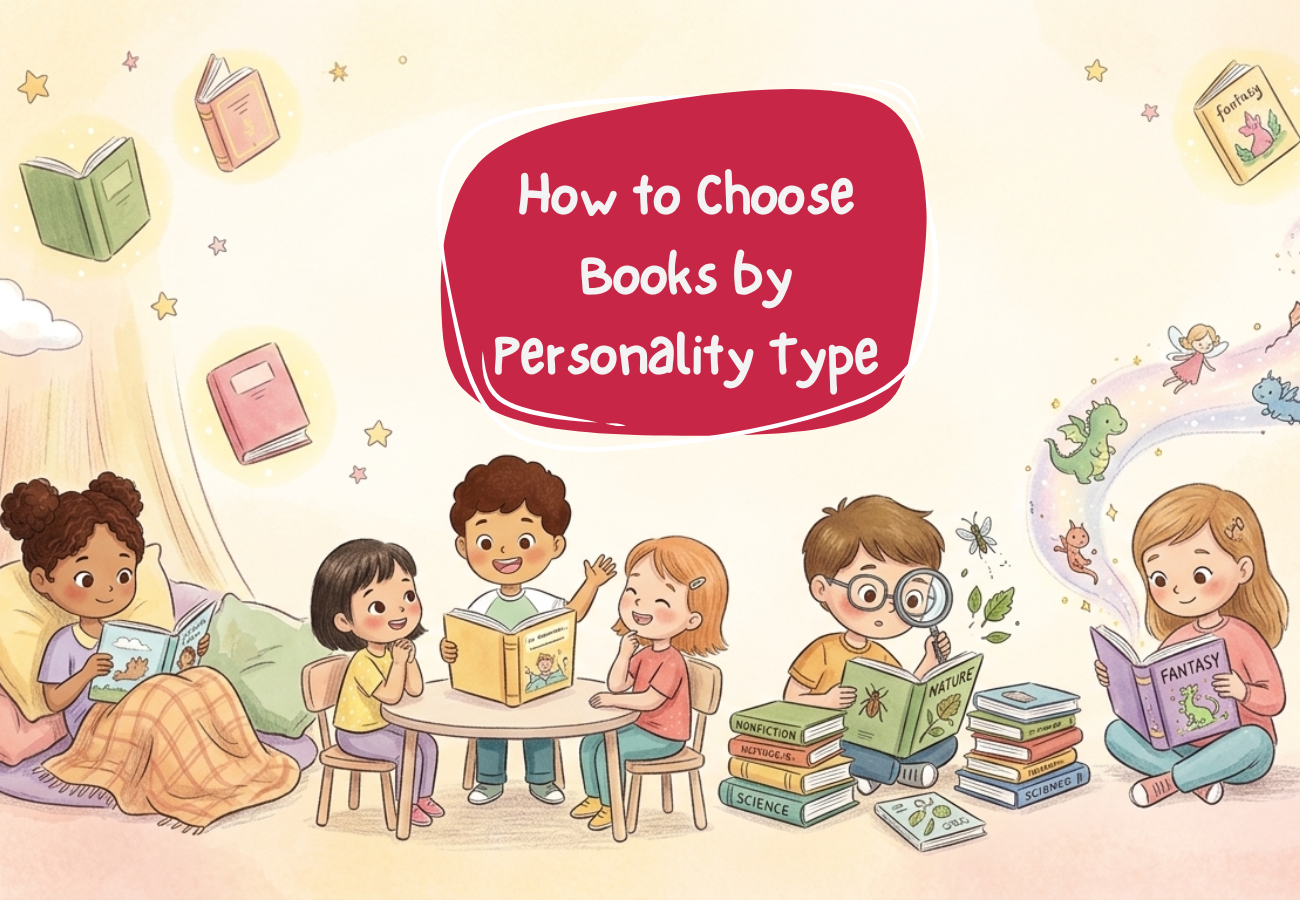
How to Choose Books by Personality Type: A Parent’s Guide to Finding Books Kids Will Love
Learning how to choose books by personality type can change the way your child feels about reading. Some kids love loud adventure stories. Others want quiet books about feelings and friendship. Neither is wrong. When you match books to your child’s personality, reading stops feeling like a chore. It becomes something they look forward to. […]