How to Choose Books by Personality Type: A Parent’s Guide to Finding Books Kids Will Love

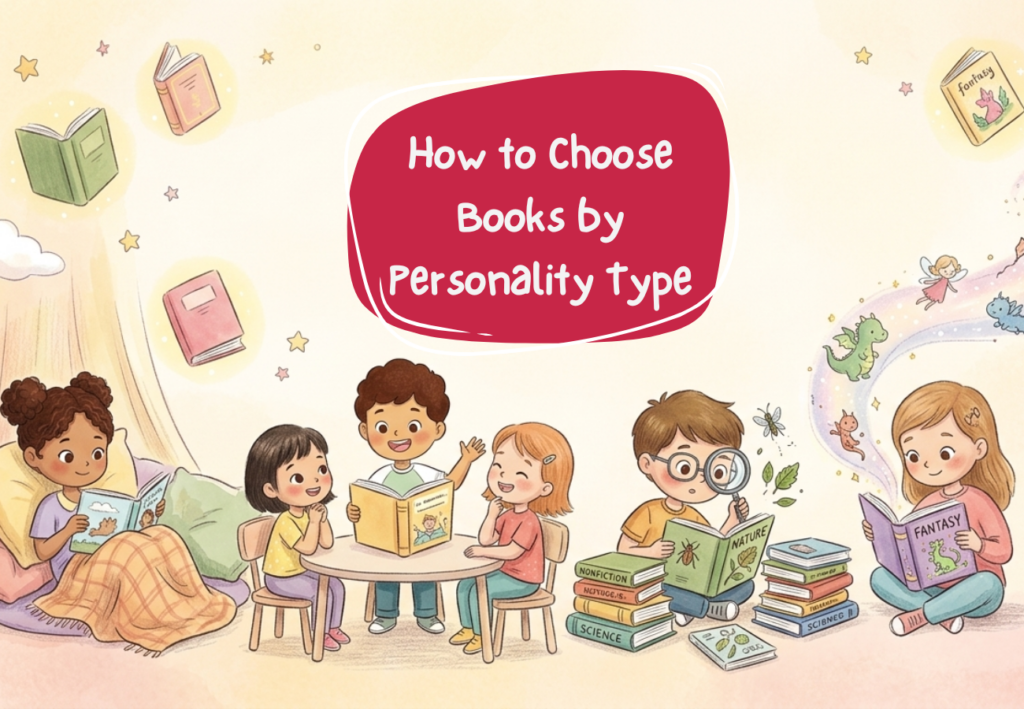
Learning how to choose books by personality type can change the way your child feels about reading. Some kids love loud adventure stories. Others want quiet books about feelings and friendship. Neither is wrong.
When you match books to your child’s personality, reading stops feeling like a chore. It becomes something they look forward to.
This guide will help you understand your child’s reading personality. You’ll learn what to look for, what to avoid, and how to build a home library they’ll actually use.
Why Personality Matters When Choosing Books
Every child is different. A book that excites one kid might bore another.
Personality shapes how a child connects with a story. It affects the pace they enjoy, the characters they relate to, and even the length of book they can finish.
When parents only choose books by age or grade level, they often miss this piece. A “good” book for a 9-year-old isn’t good for every 9-year-old.
Research backs this up. A study published in Early Childhood Research Quarterly found that a child’s temperament is linked to early literacy skills, separate from factors like vocabulary or parent education. In short: how a child is wired shapes how they learn to read, not just what they’re taught.
Here’s what personality affects:
- Pacing preference — fast action vs. slow, detailed stories
- Character connection — bold heroes vs. quiet thinkers
- Subject interest — facts vs. fantasy vs. feelings
- Reading environment — needs quiet vs. enjoys reading aloud with others
Understanding these patterns is the first step in choosing books for children that actually stick.
Common Personality Types in Children
Most kids fall into a few general reading personality groups. Your child may show traits from more than one. That’s normal.
Introverted Readers
Introverted kids often prefer calm, character-driven stories. They like having time alone with a book.
Books for introverted kids usually work best when they:
- Focus on inner thoughts and emotions
- Have a slower, steady pace
- Feature one or two main characters instead of large casts
Introverted readers often enjoy mysteries, quiet fantasy, or stories about a single character solving a personal problem.
Extroverted Readers
Extroverted kids are energized by people and action. Sitting still with a book can feel hard for them at first.
Books for extroverted kids tend to succeed when they:
- Move quickly with lots of dialogue
- Include humor or group adventures
- Work well as read-aloud or shared stories
Graphic novels and books with short chapters often help extroverted kids stay engaged.
Curious Explorers
Curious kids ask “why” about everything. They want facts, surprises, and new ideas.
These readers love:
- Nonfiction books on science, animals, or history
- Mystery and puzzle-based stories
- Books with maps, diagrams, or fun facts
Creative Dreamers
Creative children often have big imaginations. They enjoy stories that let them picture new worlds.
Good matches include:
- Fantasy and fairy tales
- Books with rich, descriptive language
- Stories that involve art, music, or invention
Sensitive and Empathetic Children
Books for sensitive children should be chosen with care. These kids feel stories deeply, which is a strength, not a weakness.
Look for books that:
- Handle emotional topics gently
- Show characters working through feelings
- Avoid intense fear or violence, especially in early elementary years
Adventure Seekers
Adventure seekers want action, danger, and excitement. They often choose books by the cover or the first page alone.
These readers enjoy:
- Survival stories
- Quest-based fantasy
- Fast-paced series with cliffhangers
Best Book Genres for Each Personality Type
Use this table as a quick reference when picking your next book.
| Personality Type | Best Genres | Avoid |
|---|---|---|
| Introverted | Quiet fiction, mystery, character-driven fantasy | Loud, chaotic group stories |
| Extroverted | Graphic novels, humor, adventure series | Long, slow-paced single-character books |
| Curious Explorer | Nonfiction, science, puzzles | Books with no factual hook |
| Creative Dreamer | Fantasy, fairy tales, poetry | Strict nonfiction with no imagination |
| Sensitive Child | Gentle stories, friendship themes | High-fear or high-conflict plots |
| Adventure Seeker | Action, survival, quests | Slow, descriptive literary fiction |
This table covers some of the best books for different personality types, but it’s a starting point. Watch how your child reacts and adjust from there.
How to Identify Your Child’s Reading Personality
You don’t need a formal test. Watching your child’s everyday behavior tells you a lot.
Ask yourself these questions:
- Does my child prefer playing alone or with a group?
- Do they ask a lot of “why” and “how” questions?
- Do they get upset easily during sad movies or shows?
- Do they like fast games or slow, careful ones?
- Do they enjoy make-believe and pretend play?
Their answers point toward reading preferences in children that match real personality traits.
You can also try a simple experiment. Bring home three very different books — one calm, one funny, one fact-based. See which one your child picks up first, and which one they finish.
This hands-on approach is often the fastest way to learn how to find books kids will love. If you’re also wondering whether your child’s pace is “normal,” our guide on when kids start reading covers typical milestones by age.
Signs You’ve Found the Right Book
Sometimes it’s hard to know if a book is truly a good fit. Look for these signs.
Checklist: Is this the right book?
- Your child asks to keep reading past bedtime
- They talk about the characters like they’re real
- They finish the book without being reminded
- They ask for the next book in the series
- They reread favorite parts on their own
If most boxes are checked, you’ve found a strong match. If your child puts the book down and avoids it, that’s useful information too. It simply means the next pick should shift in a new direction.
Common Mistakes Parents Make When Choosing Books
Even caring parents fall into a few traps. Here are the most common ones.
Choosing only by age or grade level. Age ranges are general guides, not personality matches. A book “for age 8” might not fit an 8-year-old’s actual interests.
Picking books because they were childhood favorites. Your favorite book may not connect with your child’s personality at all.
Giving up after one bad match. One boring book doesn’t mean your child dislikes reading. It often means the genre was wrong.
[BANNER: I Can Try Again] Reason: directly reinforces the “don’t give up” message for parents and kids alike.
Ignoring format preferences. Some kids love books based on personality that come as graphic novels or audiobooks, not just traditional chapter books.
Forcing books that are “good for them.” Educational value matters, but joy matters more. A child who enjoys reading will naturally read more — and learn more — over time. If comprehension is also a concern, our 15 strategies to improve reading comprehension can help once you’ve found a book they love.
Creating a Personalized Home Library
A home library doesn’t need to be big. It needs to be right for your child.
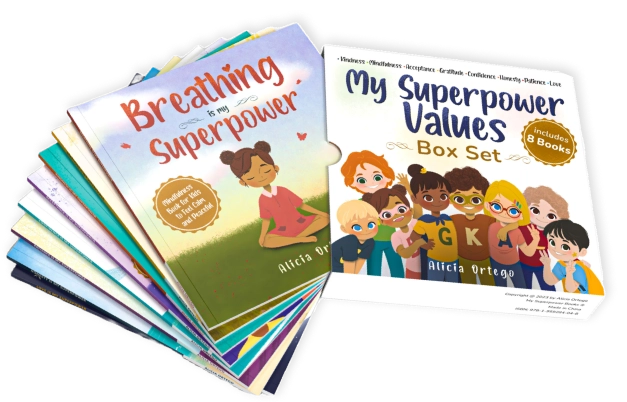
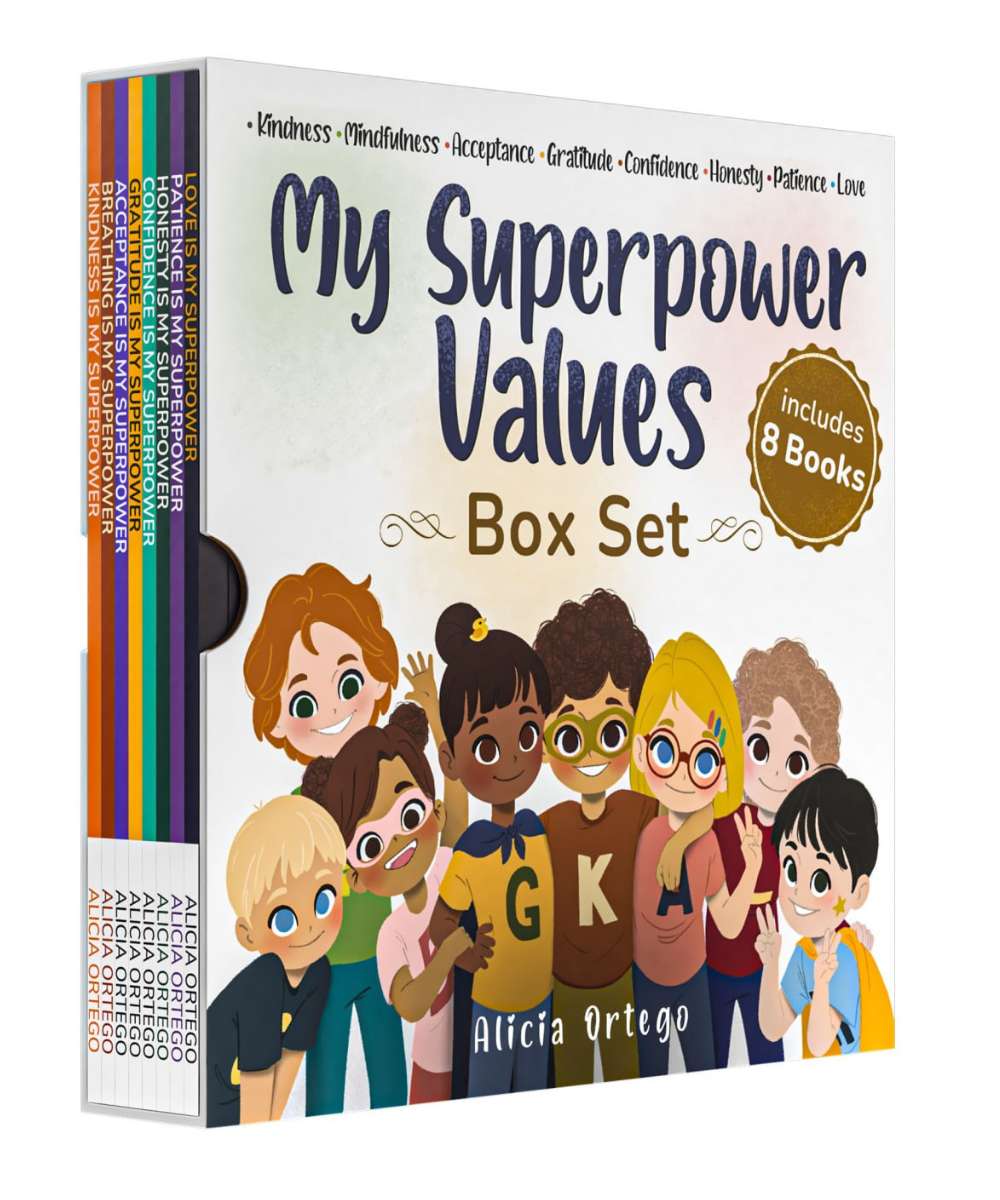
[BANNER: My Superpower Box Set] Reason: a ready-made starter set covering multiple personality angles (kindness, gratitude, listening, confidence) — perfect anchor for a new home library.
Steps to build one:
- Start with 5–10 books matching your child’s main personality traits.
- Mix in one or two books slightly outside their comfort zone.
- Rotate books every few weeks to keep things fresh.
- Let your child help choose titles at the store or library.
- Keep books visible and within easy reach, not packed away.
This approach supports books for curious kids, books for creative children, and every other personality type, because the system adjusts to the child instead of the other way around. To track what’s working, a simple printable reading log can help you spot patterns over time.
A small, well-matched shelf often gets more use than a large collection of random titles.
FAQ
What is a reading personality?
A reading personality is the pattern of interests, pacing, and emotional needs a child brings to books. It includes things like preferring quiet stories or loud action, facts or fantasy, and solo reading or group reading.
How do I choose books my child will actually read?
Watch your child’s everyday habits, like how they play and what topics they ask about. Then pick books that match that energy level and interest, instead of choosing based only on age or popularity.
What books are best for introverted children?
Introverted children usually do best with calm, character-focused stories that have a slower pace and a small cast of characters, such as quiet mysteries or gentle fantasy novels.
How do I choose books my child will enjoy?
Start by noticing what your child naturally gravitates toward in play, shows, and conversation. Choose books that mirror that interest, then watch how they respond and adjust your next pick.
What books are best for different personality types?
Introverted kids tend to enjoy calm, character-driven stories. Extroverted kids often prefer fast, funny, or group-based stories. Curious kids like nonfiction, and creative kids enjoy fantasy and imaginative tales.
Can personality affect reading preferences?
Yes. Personality traits like curiosity, sensitivity, and energy level strongly influence what kind of pacing, subject matter, and tone a child enjoys in a book.
Why does my child lose interest in books?
Often it’s not a dislike of reading itself, but a mismatch between the book’s pacing or subject and the child’s personality. Switching genres can often solve the problem.
How do I find books for reluctant readers?
Try shorter formats first, like graphic novels or short-chapter books. Match the topic to something your child already loves, such as animals, humor, or adventure, rather than forcing a “classic” title. For kids who need extra support, our list of books for reluctant and ADHD readers is a good place to start.
What genres are best for introverted children?
Quiet fiction, character-driven mysteries, and gentle fantasy tend to work well, since these genres allow space for reflection without overwhelming action or large groups of characters.
Final Thoughts
Knowing how to choose books by personality type turns reading from a struggle into something your child genuinely enjoys. There’s no single “right” book for every kid — only the right book for your kid, at this stage, with these interests.
Pay attention, experiment a little, and let your child’s personality guide the shelf. The right book is often closer than you think.
Looking for one more nudge? These reading quotes for kids are a sweet way to celebrate the books your child loves most.
More articles
Top Math Apps for Kids: A Practical 2026 Guide for Parents and Educators
Finding a good math app for your child sounds simple until you actually start looking. Some apps are little more than worksheets dressed up with cartoons and rewards. Others are entertaining games where the educational part feels like an afterthought. The best math apps for kids sit somewhere in the middle: children genuinely want to […]
The Calm, Prepared Parent: Why CPR Training Belongs Beside Emotional Intelligence Lessons
My daughter once told me her feelings were “too big for her body.” She was four, fresh off a picture book that teaches kids to name what they feel instead of melting down. It’s a lovely lesson for parents, teachers, and daycare providers to pass along. But here’s the question that stopped me cold: if […]
Creating a healthier rhythm between screens, play, and rest
It is five o’clock, homework is finished, and your child asks for the tablet. The device has already been used for school, but a favorite game or video may also be how your child relaxes at the end of a long day. Moments like this can make screen decisions feel more complicated than they need […]