20 Social-Emotional Learning Activities for Homeschoolers
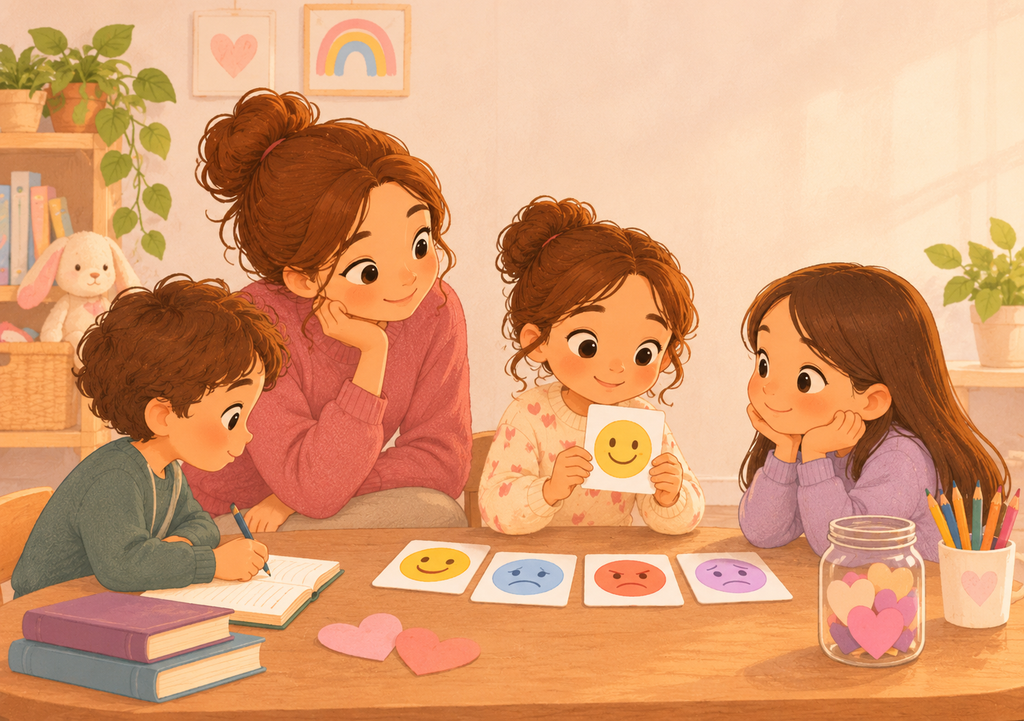
Homeschooling is about more than reading, writing, and math. It’s also an opportunity to help children understand their feelings, build friendships, manage frustration, and make thoughtful decisions. And the good news? You don’t need a special curriculum to teach these important life skills.
Social-emotional learning activities for homeschoolers can be as simple as talking about feelings over breakfast, practicing deep breathing before a challenging lesson, or exploring kindness through a favorite storybook.
Whether you’re homeschooling a preschooler or an elementary school student, these 20 fun, practical SEL activities will help you bring emotional learning into your daily routine. Most take just 5–15 minutes and require materials you probably already have at home.
What Is Social-Emotional Learning in Homeschooling?
Social-emotional learning (SEL) is the process through which children develop skills to understand emotions, build healthy relationships, manage challenges, and make responsible choices.
According to the CASEL framework, social-emotional learning includes five core competencies:
- Self-awareness: Recognizing feelings, strengths, and personal needs.
- Self-management: Learning to handle emotions, stress, and frustration.
- Social awareness: Understanding others’ feelings and perspectives.
- Relationship skills: Communicating, cooperating, and resolving disagreements.
- Responsible decision-making: Considering choices, consequences, and the well-being of others.
In a homeschool environment, these skills can be practiced naturally throughout the day.
A difficult math problem becomes an opportunity to practice patience. A disagreement between siblings becomes a lesson in communication. Reading a story together opens the door to conversations about empathy.
Rather than adding another subject to your schedule, SEL can become part of how your family learns and grows together.
Why Is Social-Emotional Learning Important for Homeschooled Kids?
Children need opportunities to practice emotional and social skills, whether they learn at home or in a traditional classroom.
Homeschooling offers a flexible environment where parents can adapt activities to a child’s personality, interests, and developmental needs.
Social-emotional learning can help children:
- Recognize and express emotions in healthy ways.
- Develop confidence and a positive sense of self.
- Practice patience when learning becomes challenging.
- Understand different perspectives and show empathy.
- Communicate their feelings and needs clearly.
- Build friendships and cooperate with others.
- Make thoughtful decisions and solve everyday problems.
These skills develop gradually through practice, supportive relationships, and real-life experiences.
And you don’t need to set aside an entire hour for emotional learning. A few intentional moments each day can create meaningful opportunities for growth.
20 Fun Social-Emotional Learning Activities for Homeschoolers
The following activities are organized around the five core SEL competencies. You can try them in order, choose one that matches your child’s current needs, or rotate different activities throughout the week.
Self-Awareness Activities: Helping Kids Understand Their Feelings
Self-awareness begins when children learn to recognize what they feel and understand that every emotion has a purpose.
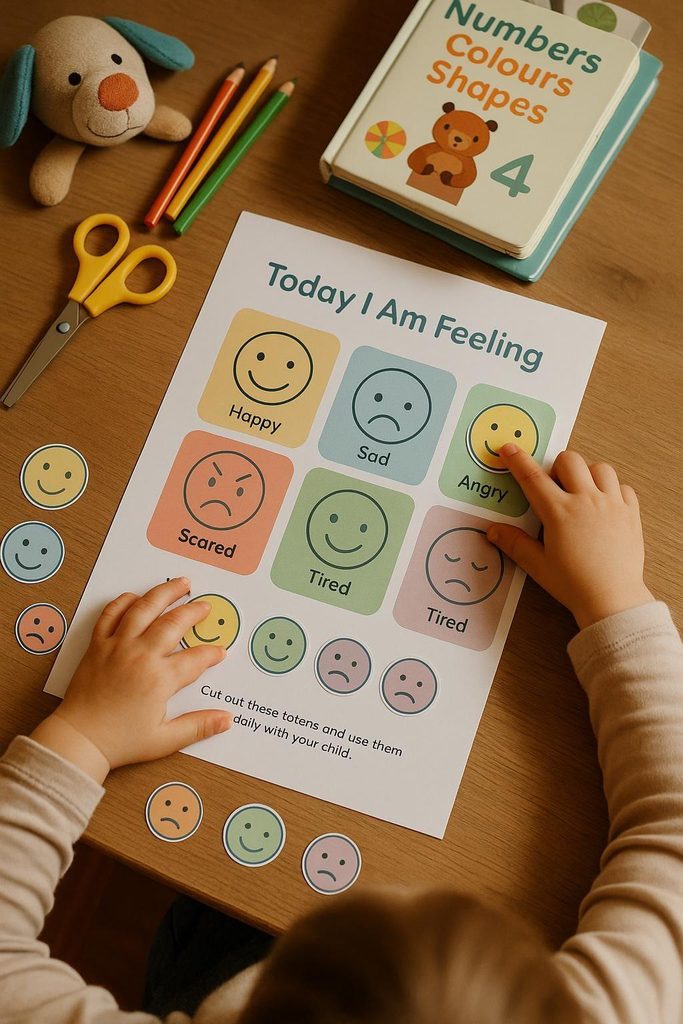
1. Create a Daily Feelings Check-In Chart
Ages 3–8 · 5 minutes · Self-awareness
A feelings chart helps children identify emotions and gives parents a gentle way to start conversations.
How to do it:
- Draw several faces showing emotions such as happy, sad, excited, worried, frustrated, and calm.
- Place the chart somewhere your child can easily reach.
- At the beginning of your homeschool day, invite your child to point to the face that matches their feelings.
- Ask, “Would you like to tell me what made you feel that way?”
Remember, there’s no right or wrong answer. Your child doesn’t need to feel happy to have a successful learning day.
Homeschool tip: Make this part of your morning routine. Older children can use more specific words such as disappointed, hopeful, overwhelmed, or proud.
2. Play Emotion Detective
Ages 4–9 · 10 minutes · Self-awareness
Can your child recognize an emotion without hearing its name?
This playful guessing game encourages children to notice facial expressions, body language, and emotional clues.
How to do it:
- Write different emotions on small cards.
- Take turns choosing a card without showing the other person.
- Act out the emotion using facial expressions and gestures.
- Let the other person guess the feeling.
- Discuss situations that might cause someone to feel that way.
Try asking, “Can someone feel excited and nervous at the same time?”
This helps children understand that emotions can be complicated and that people may express the same feeling differently.
Homeschool tip: For younger children, use illustrated emotion cards instead of written words.
3. Design a Superpower Strengths Shield
Ages 5–10 · 15 minutes · Self-awareness
Every child has strengths worth celebrating, and they go far beyond academic achievements.
A strengths shield encourages children to recognize their abilities, positive qualities, and personal growth.
How to do it:
- Draw a large shield on a sheet of paper.
- Divide it into four sections.
- Ask your child to draw or write something they’re good at, something they’re proud of, something they enjoy, and something they’re learning.
- Decorate the shield with colors, stickers, or drawings.
- Display it near your homeschool workspace.
Encourage qualities such as kindness, curiosity, persistence, creativity, and helpfulness.
Conversation starter: “What’s something you can do today that used to feel difficult?”
This activity can also introduce the idea that strengths grow through practice.
4. Start a Daily Feelings Journal
Ages 6–10 · 5–10 minutes · Self-awareness
Journaling gives children a quiet opportunity to reflect on their experiences and emotions.
It doesn’t need to involve long paragraphs or perfect spelling.
How to do it:
- Give your child a notebook dedicated to feelings and reflections.
- Offer one simple prompt each day.
- Let your child write, draw, or use stickers to express their thoughts.
- Invite them to share if they feel comfortable.
Try these journal prompts:
- Today I felt proud when…
- Something that made me smile was…
- I felt frustrated when…
- One thing I learned about myself is…
Homeschool tip: Younger children can draw pictures while you write down their words. Respect their choice to keep some reflections private.
Self-Management Activities: Teaching Emotional Regulation and Patience
Children experience big emotions, especially when they’re tired, overwhelmed, or facing something difficult.
Self-management activities help them practice ways to respond to those feelings without expecting emotions to disappear.
5. Practice Five-Finger Breathing
Ages 3–10 · 2–5 minutes · Self-management
Five-finger breathing is a simple mindfulness exercise that combines slow breathing with gentle movement.
How to do it:
- Ask your child to spread the fingers of one hand.
- Using the index finger of the other hand, slowly trace upward along the thumb while breathing in.
- Trace downward while breathing out.
- Continue tracing each finger, breathing gently.
- Repeat if your child finds it helpful.
Practice when your child is already calm so the technique feels familiar during challenging moments.
Homeschool tip: Try this before a difficult lesson or after an energetic activity. Let children breathe at a comfortable pace rather than forcing long breaths.
6. Build a Cozy Calm-Down Corner
Ages 3–10 · 15–20 minutes to set up · Self-management
A calm-down corner is a welcoming space where children can rest, recognize their feelings, and practice calming strategies.
It isn’t a punishment or a place children should be sent for having difficult emotions.
How to do it:
- Choose a quiet, comfortable corner of your home.
- Add a pillow, soft blanket, or favorite stuffed animal.
- Include a few calming tools, such as books, drawing materials, or sensory items appropriate for your child’s age.
- Create a small poster with choices like “Take a breath,” “Draw your feelings,” or “Ask for a hug.”
- Invite your child to help personalize the space.
When your child becomes overwhelmed, you might say, “Would you like to sit in your cozy corner together?”
Homeschool tip: Make the space available throughout the day, not only when something goes wrong.
7. Try the Frustration-to-Solution Challenge
Ages 5–10 · 10 minutes · Self-management
Learning something new can be frustrating. This activity teaches children to notice frustration and explore what might help.
How to do it:
- Choose a manageable challenge, such as a puzzle or building activity.
- Let your child attempt it independently.
- If frustration appears, help them name the feeling.
- Ask, “What could we try differently?”
- Brainstorm options, such as taking a break, asking for help, or breaking the task into smaller steps.
Celebrate the child’s willingness to try a new strategy rather than focusing only on completing the task.
Homeschool tip: Use this approach naturally during math, handwriting, or other challenging lessons. Don’t deliberately overwhelm your child to create a teaching moment.
8. Take Mindful Movement Breaks
Ages 3–10 · 5–10 minutes · Self-management
Movement breaks give children opportunities to notice how their bodies feel and reset between learning activities.
How to do it:
- Pause between two homeschool lessons.
- Invite your child to choose a movement, such as stretching, dancing, walking, or balancing.
- Move together for a few minutes.
- Slow down and notice breathing, heartbeat, or muscle tension.
- Ask, “How does your body feel now?”
Try making a movement jar filled with activity cards your child can choose from.
Homeschool tip: Offer movement breaks before your child becomes exhausted or restless. Some children concentrate better with frequent, short breaks.
Social Awareness Activities: Building Empathy and Kindness
Social awareness helps children recognize that other people have their own feelings, experiences, and perspectives.
These activities encourage empathy, gratitude, and thoughtful interactions.
9. Walk in Someone Else’s Shoes
Ages 5–10 · 10 minutes · Social awareness
This imagination activity encourages children to consider how different people might experience the same situation.
How to do it:
- Describe an everyday scenario.
- Ask your child how each person involved might feel.
- Discuss why people might respond differently.
- Brainstorm ways to offer support.
For example:
“Two children are playing together when a third child asks to join. What might each child be thinking or feeling?”
Help your child consider multiple possibilities instead of assuming there’s only one correct emotional response.
Homeschool tip: Use situations from books, playground visits, family gatherings, or homeschool group activities.
10. Complete a Kindness Bingo Challenge
Ages 4–10 · 10–15 minutes daily · Social awareness
Turn everyday acts of kindness into a fun family challenge.
How to do it:
- Draw a 3×3 or 4×4 bingo grid.
- Fill each square with a simple kindness action.
- Invite your child to choose one action to complete.
- Mark the square after the action is done.
- Discuss how kindness can make a difference.
Possible bingo squares include helping prepare a meal, thanking someone, sharing a toy, giving a sincere compliment, and helping clean up.
Homeschool tip: Focus on the meaning behind the actions rather than completing the board as quickly as possible. Kindness shouldn’t depend on earning a prize.
11. Become a Storybook Empathy Detective
Ages 3–10 · 10–15 minutes · Social awareness
Reading together creates opportunities to explore emotions through fictional characters.
Children can consider difficult situations from a comfortable distance and practice understanding different perspectives.
How to do it:
- Choose a picture book featuring a relatable emotional challenge.
- Pause at an important moment in the story.
- Ask your child what the character might be feeling.
- Look for clues in the illustrations and dialogue.
- Discuss what the character might need or what another character could do to help.
Try these questions:
- “How do you think the character feels right now?”
- “What makes you think that?”
- “Have you ever felt something similar?”
- “What would you say to this character?”
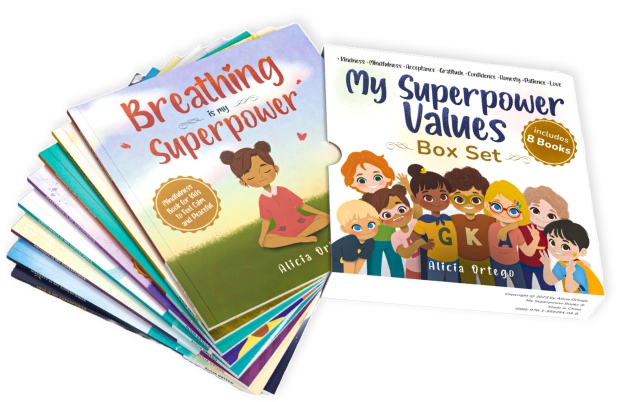
For example, Kindness Is My Superpower by Alicia Ortego can be a starting point for conversations about kindness and caring for others.
Homeschool tip: Let your child disagree with your interpretation. Exploring different perspectives is part of the learning process.
12. Create a Family Gratitude Jar
Ages 4–10 · 5 minutes · Social awareness
A gratitude jar helps children notice meaningful moments, appreciate others, and reflect on positive experiences.
How to do it:
- Find a clean jar or small box.
- Decorate it together.
- Keep small pieces of paper nearby.
- Invite family members to write or draw something they’re grateful for.
- Read a few notes together at the end of the week.
Encourage children to notice simple things: a helpful friend, a favorite meal, time outdoors, or someone who made them feel loved.
For more ideas, explore these gratitude lesson plans for children.
Homeschool tip: Gratitude shouldn’t replace conversations about sadness or disappointment. Children can appreciate good things while still having a difficult day.
Relationship Skills Activities: Practicing Communication and Cooperation
Homeschoolers can develop relationship skills through interactions with siblings, relatives, friends, neighbors, and community groups.
The following activities offer opportunities to practice listening, teamwork, communication, and conflict resolution.
13. Role-Play Everyday Social Situations
Ages 4–10 · 10–15 minutes · Relationship skills
Role-playing allows children to practice communication in a low-pressure environment.
How to do it:
- Choose a familiar situation.
- Assign roles to yourself and your child.
- Act out the conversation.
- Switch roles and try again.
- Discuss what each person could say or do.
Useful scenarios include asking to join a game, telling someone you disagree, inviting a new friend to play, and responding when someone says no.
Homeschool tip: Use stuffed animals or puppets for younger children. Older children can practice situations they might encounter at sports, clubs, or homeschool meetups.
14. Hold a Family Listening Circle
Ages 5–10 · 10 minutes · Relationship skills
Good communication involves listening as well as speaking.
A family listening circle gives everyone a chance to share ideas without interruption.
How to do it:
- Sit together in a circle.
- Choose a simple discussion question.
- Use a small object as a talking piece.
- Only the person holding the object speaks.
- Invite listeners to summarize what they heard before responding.
Try asking, “What’s something that made you feel proud this week?”
Homeschool tip: Keep the atmosphere relaxed. Children should be allowed to pass if they don’t want to share.
15. Try a Cooperative Building Challenge
Ages 4–10 · 15–20 minutes · Relationship skills
Teamwork activities help children practice sharing ideas, negotiating, taking turns, and solving problems together.
How to do it:
- Gather building blocks, recycled cardboard, or construction materials.
- Give your team a challenge, such as building the tallest tower possible.
- Encourage everyone to suggest a design.
- Work together to create the structure.
- Reflect on what made cooperation easier or harder.
Ask, “What did we do when we had different ideas?”
Homeschool tip: If you’re homeschooling one child, participate as their teammate or invite a friend or sibling to join.
16. Practice with Friendship Conversation Cards
Ages 5–10 · 10 minutes · Relationship skills
Conversation cards help children practice starting discussions, expressing opinions, and showing interest in others.
How to do it:
- Write friendly questions on small cards.
- Place them in a bowl.
- Take turns drawing and answering questions.
- Encourage follow-up questions.
- Practice listening without interrupting.
Sample questions:
- “What’s your favorite thing to do with a friend?”
- “How can you tell when someone wants to join a game?”
- “What can you do if a friend likes something different from you?”
- “How can you show someone you’re listening?”
Homeschool tip: Use the cards before homeschool group gatherings to help children prepare for conversations, without pressuring them to follow a script.
Responsible Decision-Making Activities: Helping Kids Make Thoughtful Choices
Children develop decision-making skills when they have opportunities to consider options, solve problems, and reflect on consequences.
These activities encourage thoughtful choices without expecting perfection.
17. Play “What Would You Do?”
Ages 5–10 · 10 minutes · Responsible decision-making
This scenario game helps children explore choices before encountering similar situations in real life.
How to do it:
- Write everyday situations on cards.
- Read one scenario aloud.
- Ask your child what they could do.
- Discuss possible outcomes.
- Explore another reasonable response.
Example scenarios:
- You accidentally break something that belongs to your sibling.
- A friend wants you to join a game that feels unsafe.
- You notice someone sitting alone during a group activity.
- You feel angry because a game isn’t going your way.
Ask, “Who might be affected by your choice?”
Homeschool tip: Avoid turning every scenario into a test with one perfect answer. Encourage children to explain their reasoning.
18. Make a Choice-and-Consequence Tree
Ages 6–10 · 15 minutes · Responsible decision-making
A decision tree helps children visualize how different choices can lead to different outcomes.
How to do it:
- Draw a large tree with several branches.
- Write a simple problem at the bottom.
- Label each branch with a possible choice.
- Add leaves showing what might happen after each choice.
- Discuss which option seems safe, respectful, and helpful.
For example, if a child feels frustrated with homework, possible choices might include asking for help, taking a short break, or trying a different strategy.
Homeschool tip: Revisit the tree after a real-life decision to discuss what your child learned.
19. Organize a Family Problem-Solving Meeting
Ages 5–10 · 10–15 minutes · Responsible decision-making
Family meetings give children opportunities to participate in decisions that affect their daily lives.
How to do it:
- Choose a manageable family challenge, such as organizing homeschool supplies.
- Invite everyone to share their ideas.
- Write down possible solutions.
- Discuss which options are realistic and fair.
- Agree on one solution to try.
After a few days, check whether the plan is working.
Homeschool tip: Start with small decisions where children can have meaningful input. Adults should continue to take responsibility for safety and other age-inappropriate decisions.
20. Plan a Real-Life Kindness Mission
Ages 4–10 · 15–30 minutes · Responsible decision-making
Finish your SEL activity collection with a project that brings emotional learning into everyday life.
How to do it:
- Ask your child, “Who could use a little kindness this week?”
- Brainstorm safe, practical ways to help.
- Choose one meaningful action.
- Make a plan and gather any needed materials.
- Complete the mission together and reflect afterward.
Ideas include creating thank-you cards, helping a neighbor with an adult’s supervision, donating gently used books, or preparing a small gift for someone who needs encouragement.
Homeschool tip: Let your child help choose the project. Giving children a voice in the process makes the activity more meaningful.
How to Include SEL in Your Daily Homeschool Routine
You don’t need to teach all five SEL competencies every day. Instead, look for small opportunities to practice emotional skills during activities you’re already doing.
Here’s an example of how to incorporate SEL into a homeschool schedule.
| Homeschool routine | SEL activity | Time |
|---|---|---|
| Morning check-in | Feelings chart | 5 min |
| Before a challenging lesson | Five-finger breathing | 3 min |
| Reading time | Storybook empathy discussion | 10 min |
| Afternoon break | Cooperative game | 10 min |
| End-of-day reflection | Gratitude jar or journal | 5 min |
These activities can be spread throughout the day rather than completed in one session. Even choosing just one or two can make SEL easier to maintain consistently.
For more educational tools and learning ideas, explore these homeschooling resources for kids.
How to Adapt SEL Activities for Different Ages
Children develop emotional awareness and communication skills at different rates. The best homeschool SEL activities are flexible enough to meet children where they are.
Preschoolers (Ages 3–5)
Keep activities playful, visual, and brief. Use emotion pictures, puppets, songs, and simple stories.
Try feelings charts, Emotion Detective, movement breaks, and kindness bingo. Allow children to point, draw, or act rather than expecting detailed verbal explanations.
Early Elementary (Ages 6–8)
Children may be ready to explore more complex emotions and consider how their actions affect others.
Introduce feelings journals, friendship conversation cards, cooperative challenges, and simple decision-making scenarios.
Ask open-ended questions and give children time to think before responding.
Older Elementary (Ages 9–10)
Older children can explore emotional triggers, friendship challenges, and multiple possible solutions to problems.
Try decision trees, family problem-solving meetings, more detailed journaling, and community kindness projects.
Encourage independent thinking while remaining available for guidance.
Remember that developmental needs vary. Adapt activities to your child’s communication preferences, sensory needs, and interests rather than relying only on age.
Best Books and Free Resources for Teaching SEL at Home
Books can make emotional learning feel natural and enjoyable. When children recognize their own experiences in a story, they have an opportunity to explore feelings and choices without the pressure of discussing a personal situation directly.
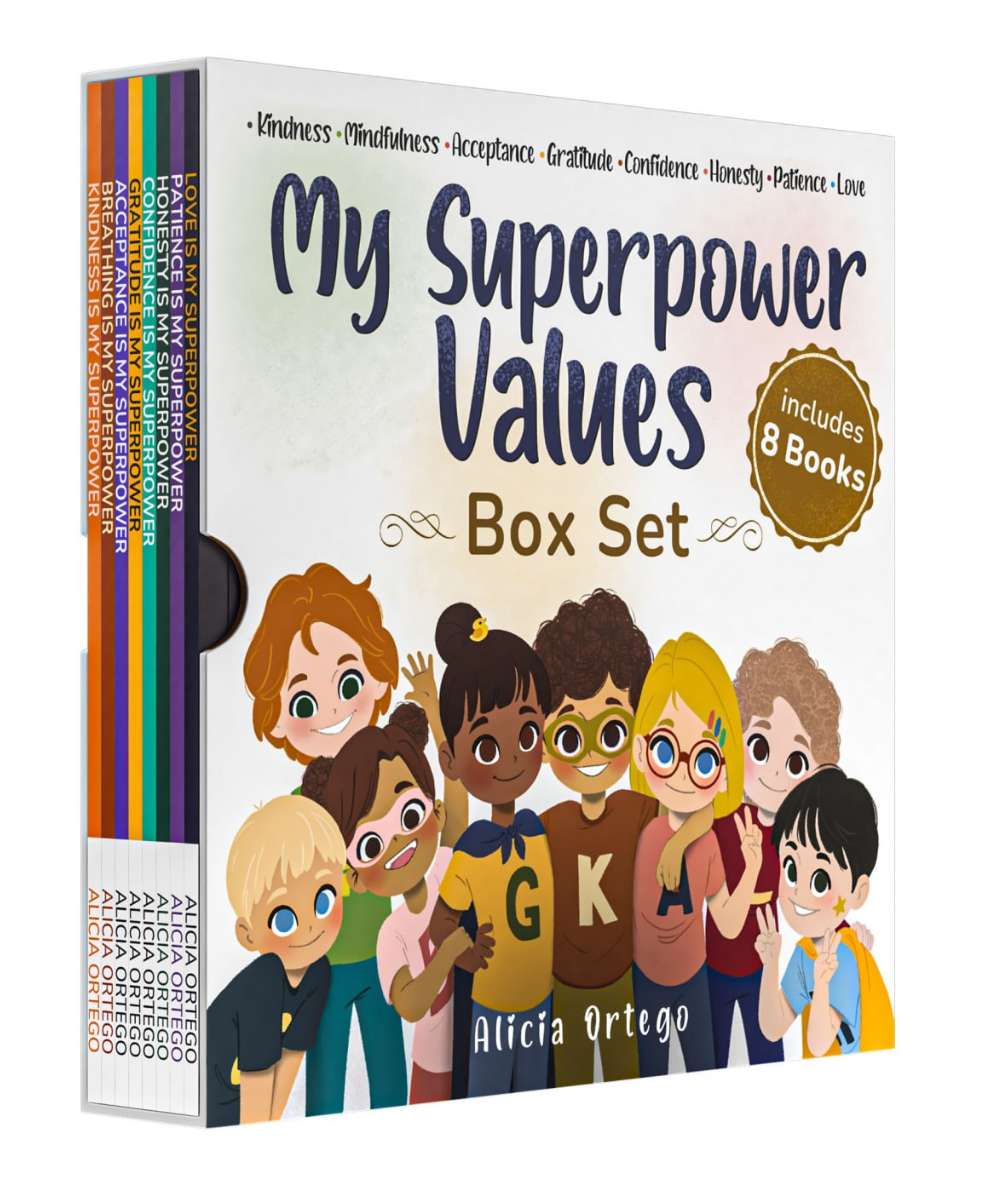
Alicia Ortego’s children’s books can complement several of the activities in this guide.
For example, Kindness Is My Superpower pairs naturally with Kindness Bingo, while Gratitude Is My Superpower can introduce a family gratitude jar. Books about confidence, honesty, and emotional regulation can also provide starting points for role-playing and reflection.
Explore the Alicia Ortego children’s book collection for stories and learning materials.
For additional resources, parents can use the CASEL SEL Framework to understand the five competencies or explore Harvard Graduate School of Education’s educational articles for ideas about child development and learning.
Alicia Ortego also offers gratitude lesson plan resources designed for young learners, including homeschoolers. Check the page for current availability and pricing.
Frequently Asked Questions About Homeschool SEL Activities
What are the best social-emotional learning activities for homeschoolers?
Some of the best SEL activities for homeschoolers include feelings check-in charts, gratitude jars, breathing exercises, cooperative games, role-playing, and storybook discussions. The most useful activities are those that match your child’s developmental needs and can be practiced regularly. Start with one simple activity and introduce others gradually.
How do I teach social-emotional learning at home?
You can teach SEL at home by modeling healthy communication, helping children identify emotions, discussing characters’ feelings during reading, and practicing problem-solving together. Everyday moments such as sharing, waiting, making mistakes, and resolving disagreements offer valuable opportunities to develop social-emotional skills.
How much time should homeschoolers spend on SEL?
There’s no universal daily time requirement for homeschool SEL. Many activities in this guide take just 5–15 minutes, and emotional learning can also happen naturally throughout the day. A short feelings check-in, a meaningful conversation, or a cooperative game can fit into an existing homeschool routine.
How can homeschooled children practice social skills?
Homeschooled children can practice social skills through homeschool groups, sports, clubs, community activities, volunteering, playdates, and interactions with relatives and neighbors. At home, role-playing, cooperative games, and family discussions help children rehearse communication and problem-solving skills they can use in real relationships.
Can SEL be taught without a formal curriculum?
Yes. Social-emotional learning can be integrated into daily routines, reading lessons, creative projects, and family conversations. A formal curriculum may provide additional structure, but parents can also use simple, intentional activities to help children practice emotional awareness, empathy, communication, and responsible decision-making.
Helping Little Hearts Grow, One Activity at a Time
Social-emotional learning doesn’t require perfect lessons, expensive materials, or a packed homeschool schedule. Often, the most meaningful moments happen in the middle of ordinary family life.
A child learns patience while working through a difficult puzzle. A sibling discovers the importance of listening. A bedtime story inspires a conversation about kindness.
Each experience offers another chance to practice the skills children will carry into friendships, classrooms, communities, and everyday life.
Choose one of these 20 social-emotional learning activities for homeschoolers and give it a try this week. Follow your child’s interests, celebrate small steps, and remember that emotional growth takes time.
Because helping children grow isn’t just about what they learn—it’s also about who they’re becoming.
More articles

Can Mindful Screen Habits Teach Emotional Regulation?
A child’s screen routine can either support calm transitions or make emotions harder to manage. Content, timing and the way adults participate all shape that experience. Mindful screen habits give children space to notice feelings, practice patience and return to offline activities without a major struggle. While a show can’t teach emotional regulation on its […]
Why Curious Kids Develop Stronger Self-Confidence
What if raising a confident child starts with something as simple as encouraging them to ask questions? Every time children explore, experiment, or figure out why something didn’t work, they’re building more than knowledge. They’re learning to trust their ideas, embrace challenges, and find solutions independently. The good news is that nurturing curiosity doesn’t require […]
What Happens to Self-Esteem When Kids Hit Learning Walls
A difficult school assignment can affect much more than a child’s grade. When repeated effort leads to confusion, kids may begin to doubt their intelligence, avoid challenges and assume that future attempts will end the same way. These learning walls are common, but the beliefs children form around them can last longer than the academic […]