How to Teach Emotional Intelligence to Kids at Home (Step-by-Step Guide for Parents)

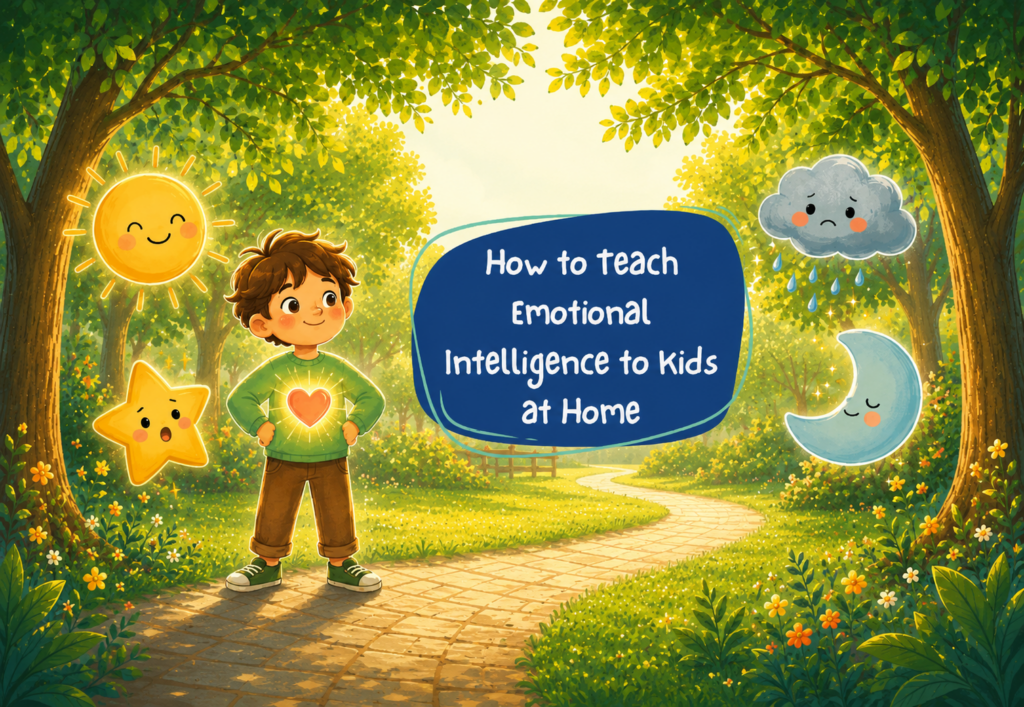
“Why Does My Child Overreact Over Everything?”
You asked them to turn off the TV. Five minutes later, there are tears, slammed doors, and a full-scale meltdown — over a cartoon.
Or maybe it’s the opposite: your child shuts down completely when something goes wrong, refusing to talk, unable to explain what they’re feeling.
If you’ve ever thought why can’t my child just manage their emotions? — you’re not alone. And you’re not failing as a parent.
What you’re seeing isn’t bad behavior. It’s a skill gap. And like any skill, emotional intelligence can be taught — at home, starting today, without any special equipment or training.
What Is Emotional Intelligence, Really?
Emotional intelligence (EQ) is the ability to understand, manage, and express emotions — your own and other people’s. For children, it breaks down into three core areas:
Self-awareness — knowing what you’re feeling and why. A child with strong self-awareness can say “I’m frustrated because I lost the game” instead of just exploding.
Empathy — understanding what someone else is feeling. This is what makes children stop and think before they act, and what builds real, lasting friendships.
Regulation — the ability to manage emotions rather than be managed by them. This doesn’t mean suppressing feelings. It means knowing how to calm down, how to wait, and how to respond instead of just react.
Research consistently shows that children with higher emotional intelligence do better academically, build stronger relationships, and handle stress more effectively. The good news: it’s not fixed at birth. EQ grows with practice.
5 Practical Ways to Teach Emotional Intelligence at Home
You don’t need a special curriculum. These are everyday strategies that fit into the routines you already have.
1. Name the Emotion — Out Loud
Children can’t manage what they can’t identify. Make a habit of naming emotions in the moment: “It looks like you’re feeling frustrated right now.” Or, after something difficult: “I noticed you seemed sad at dinner. What was going on for you?”
This isn’t just labeling — it’s building emotional vocabulary. The more words a child has for what they feel, the more control they have over those feelings. Try an emotions chart on the fridge, or a simple check-in question at bedtime: What’s one feeling you had today?
2. Model the Behavior You Want to See
Children learn from watching, not just listening. If you want a child who manages frustration calmly, they need to see you do it.
That doesn’t mean pretending everything is fine. It means narrating your own process: “I’m feeling really annoyed right now, so I’m going to take a few deep breaths before I respond.” You’re not just managing your emotion — you’re teaching them how.
Mistakes are actually opportunities here. When you lose your temper and then apologize, you’re showing that repair is possible. That’s one of the most important lessons a child can learn.
3. Make Emotional Conversations Part of Your Daily Routine
Many parents wait until there’s a problem to talk about feelings — which means those conversations always happen in the middle of a storm. Build in low-pressure moments instead.
Try “rose and thorn” at dinner (one good thing, one hard thing). Ask how did that make you feel? after books or movies. Check in on the drive home from school. These small, repeated conversations build emotional fluency over time — so when the hard moments come, your child already has the language and the habit.
4. Use Role Play to Practice Real Situations
Role play gives children a chance to rehearse social situations before they’re in them. Pick a scenario — a friend takes their toy, they’re left out at recess, someone says something unkind — and act it out together.
Try different responses: what happens if you yell? What happens if you walk away? What happens if you say how you feel? This kind of rehearsal is how children build the ability to pause before reacting. It also builds empathy naturally, because you can switch roles and ask: what do you think the other person felt?
5. Read Stories Together — and Talk About Them
This one is perhaps the most underestimated tool parents have.
When a child gets lost in a story, they’re not being lectured — they’re living alongside a character. They feel what the character feels. They worry about what comes next. And without any pressure, they start to recognize those emotions in themselves.
Books create a safe distance from real experience — and that distance is exactly what makes the learning stick. A child who shuts down in a direct conversation about their own feelings will often open up completely when they’re talking about a character who felt left out, or scared, or didn’t know what to do.
Books That Make Emotional Intelligence Visible
Stories don’t just illustrate emotions — they make them relatable in a way that direct instruction rarely does. That’s why the right books can be one of the most powerful SEL tools you have at home.
Two books that parents come back to again and again:
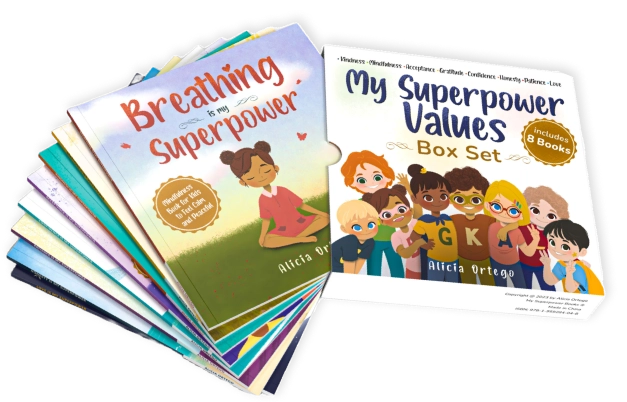
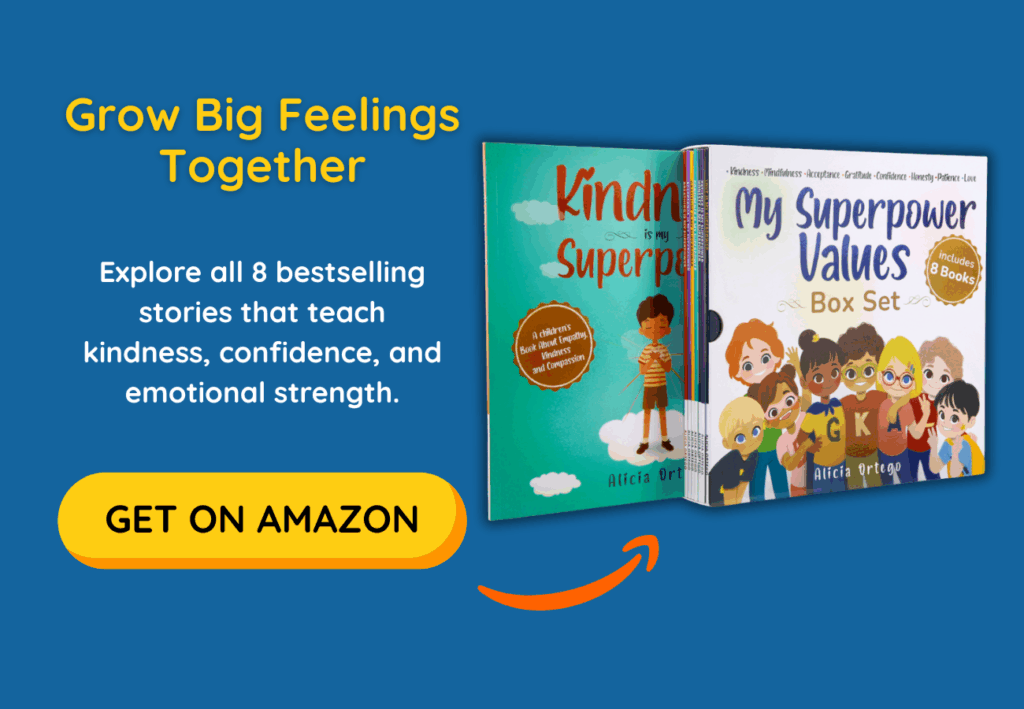
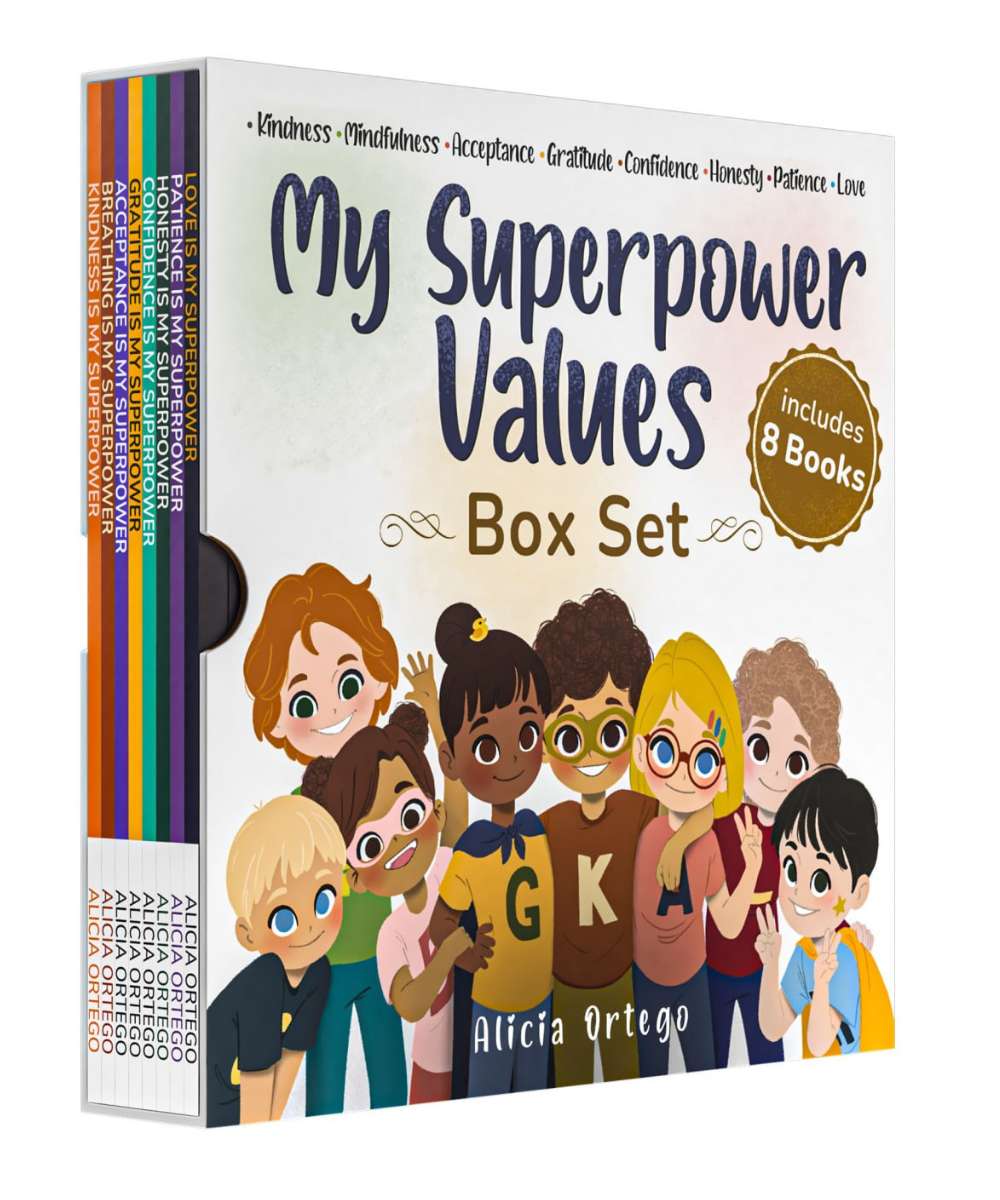
Kindness Is My Superpower follows a young child learning that small acts of kindness — sharing, including others, saying something nice — create real ripples in the world. It opens up conversations about empathy, friendship, and what it actually looks like to be kind (not just to be told to be kind).
Respect Is My Superpower helps children understand what respect looks and feels like — toward others, toward belongings, and toward themselves. It’s especially useful for children who struggle with boundaries, sharing space, or understanding why rules exist.
Both books are designed to be read together and then talked about — with prompts that feel natural rather than like a worksheet.
Free Downloads to Get You Started
To help you put these ideas into practice, here are a few free printables from our collection:
Mood Meter — a simple visual tool that helps children identify and name what they’re feeling in the moment. Perfect for the “naming emotions” practice above — stick it on the fridge or use it as a daily check-in.
Kindness Is My Superpower Worksheet — pairs beautifully with the book and helps children reflect on acts of kindness they’ve given and received. A great starting point for empathy conversations.
9 Days Social Skills Challenge — a fun, structured challenge that builds emotional and social skills one day at a time. Ideal if you want a simple routine to follow together.
Affirmations for Kids — short, positive statements that help children build self-awareness and emotional confidence. Takes two minutes a day and makes a real difference over time.
👉 Browse all free printables →
The Takeaway
Teaching emotional intelligence isn’t a single conversation. It’s hundreds of small ones — the naming, the modeling, the role play, the bedtime check-ins, the stories you read together on the couch.
None of it has to be perfect. A parent who tries and sometimes gets it wrong is still showing their child that emotions are worth paying attention to — and that’s the foundation everything else is built on.
Start small. Start tonight. And know that every moment you invest in your child’s emotional world is one that pays back for the rest of their life.
More articles
Family Reading Night Ideas: 40 Fun Activities for Schools and Families
Family Reading Night is one of the simplest ways a school can turn reading from a homework chore into something a whole family looks forward to. When it’s done well, kids see their parents excited about books, parents see how their children read and think, and teachers get a rare evening where the whole community […]
How Art Activities Help Kids Build Confidence
Every parent has watched their child hesitate before trying something new. Maybe it was raising a hand in class, joining a game at the playground, or simply saying hello to another kid. Confidence is not something children are born with. It is a skill they build, one small success at a time. And few places […]
15 Proven Reading Motivation Techniques That Help Kids Love Reading
You’ve tried setting aside reading time. You’ve bought the books. You’ve offered rewards. And your child still stares at the wall, fidgets, or finds literally anything else to do the moment a book appears. You’re not doing it wrong. And your child isn’t broken. Getting kids genuinely interested in reading is one of the most […]