15 Proven Reading Motivation Techniques That Help Kids Love Reading

You’ve tried setting aside reading time. You’ve bought the books. You’ve offered rewards. And your child still stares at the wall, fidgets, or finds literally anything else to do the moment a book appears.
You’re not doing it wrong. And your child isn’t broken.
Getting kids genuinely interested in reading is one of the most common challenges parents face — and one of the most solvable. The right reading motivation techniques don’t involve bribes, battles, or begging. They work with how children actually think and feel about books, not against it.
Here’s everything you need to know.
Why Some Kids Lose Interest in Reading
Before diving into strategies, it helps to understand what caused the disconnect in the first place.
Most children don’t arrive at age seven deciding they hate books. Something happened — or didn’t happen — along the way.
They were pushed before they were ready. Early reading pressure, especially when a child watches peers move faster, can create an association between books and failure before the habit even forms.
The books didn’t match who they are. A child who loves football handed a fairy tale isn’t a reluctant reader. They’re an unmatched reader. The resistance is about the specific book, not books in general.
Reading became a performance. The moment reading is only about accuracy, speed, and comprehension tests, the joy tends to disappear. Children who feel evaluated every time they open a book stop wanting to open books.
Something else is more stimulating. Screens, games, and social media deliver instant reward. Reading asks for patience — and that’s a hard sell when faster dopamine hits are always one tap away.
They had a string of bad reading experiences. One embarrassing read-aloud, one book they couldn’t finish, one “you should be further along by now” can linger far longer than parents realize.
Understanding the root cause matters because it shapes which techniques will work best for your specific child.
What Actually Motivates Children to Read
Research on reading motivation consistently points to a few key drivers:
Autonomy — children read more when they choose what they read. Even small choices (“do you want to start with this page or that one?”) increase engagement.
Competence — children are motivated by books they can actually read. Success feels good. Struggling through something too hard every single session builds avoidance, not love.
Relatedness — children are more motivated when reading feels connected to people they love or topics they care about. Reading alongside a parent, or reading about their favorite animal, taps into this naturally.
Purpose — when children understand why they’re reading — for fun, to find out what happens, to share a story with a sibling — they engage more willingly.
Every technique below works because it targets at least one of these four drivers.
15 Reading Motivation Techniques
1. Let Kids Choose Their Books
This one is non-negotiable. Choice is the single most powerful reading motivation tool available to parents, and it costs nothing.
Let your child browse at the library or bookstore without steering them toward “better” options. If they choose a book you think is too easy, too silly, or one they’ve read before — that’s fine. The goal right now is that they want to read something. Taste and challenge come later.
2. Match Books to Interests
Think about what your child already loves. Not what you wish they loved — what they actually talk about, play, and search for on YouTube. That interest is your entry point.
A child obsessed with dogs should be reading about dogs. A child who loves football should have access to football biographies and sports fiction. A child who plays video games might start with books based on games they already know.
The guide to choosing books by personality type goes deeper on this — it helps you match books not just to interests but to how your child is actually wired as a person.
3. Create Reading Rituals
Habits are powerful precisely because they bypass the daily negotiation. When reading is just what happens at 7:30pm — every night, without discussion — children stop resisting it and start expecting it.
Keep the ritual consistent, short to start, and warm. A specific blanket, a cup of hot chocolate on winter evenings, the same cozy corner — these small rituals create positive associations that make reading feel like a reward rather than a requirement.
4. Use Read-Aloud Time
Reading aloud to children is one of the most underused tools in a parent’s toolkit, especially once children can read independently. Many parents stop reading aloud around age six or seven, but the research suggests continuing well into middle childhood and beyond.
When you read aloud, your child accesses stories that are more complex than what they can read alone. They hear what fluent, expressive reading sounds like. And they associate books with your voice, your presence, and your undivided attention — which is deeply motivating.
Read aloud a chapter or two further into a book than your child can manage alone, then stop at a cliffhanger. The desire to know what happens next is a powerful motivator to pick the book up themselves.
5. Build a Reading-Friendly Environment
Children read more when books are visible, accessible, and nearby. A shelf in their bedroom is good. A basket in the living room is better. Books in the car, in their bag, on the kitchen table — all of these casual placements invite casual reading.
The environment also includes atmosphere. Some children focus best with quiet; others like background noise. Some need to lie on the floor; others prefer a proper chair. Let your child find their own reading position and place rather than insisting they sit at a desk.
6. Set Achievable Reading Goals
Goals work when they’re specific, small, and tied to something the child actually cares about. “Read more this year” is not a goal. “Read five books before your birthday” or “finish one chapter before screen time” is a goal.
Work with your child to set the goal together rather than imposing it from above. Children who participate in setting their own targets are more motivated to reach them.
A printable reading log can make goals visual and concrete — especially satisfying for children who like to track and celebrate their own progress.
7. Celebrate Progress
Celebration doesn’t mean large rewards. It means acknowledgment. Noticing out loud that your child finished a book, pushed through a hard chapter, or read every night this week gives that effort meaning.
Specific praise lands better than generic praise. “You read that whole chapter even though the words were tricky — I noticed you didn’t give up” is more motivating than “good job reading.” It tells children exactly what behavior is worth repeating.
Small milestone celebrations — a special breakfast when they finish a series, a new bookmark when they reach ten books — add up over time without creating a transactional relationship with reading.
8. Use Series Books
Series are one of the most reliable reading motivation strategies that exist, and they work for a simple reason: the hard work of caring about characters is already done. When a child finishes book one and wants book two, they are motivated by their own investment in the story — not by any external push from you.
Find a series your child connects with and make sure the next book is always available before they finish the current one. The gap between finishing one book and having the next is where motivation leaks out.
9. Connect Books to Real Life
Reading feels purposeful when it connects to something happening in your child’s actual world. Before a trip, read books set in that place. After a child mentions being nervous about something, find a story where a character faces the same feeling.
This kind of connection turns books from abstract objects into useful, relevant tools — and children who see books as useful are far more likely to reach for them independently.
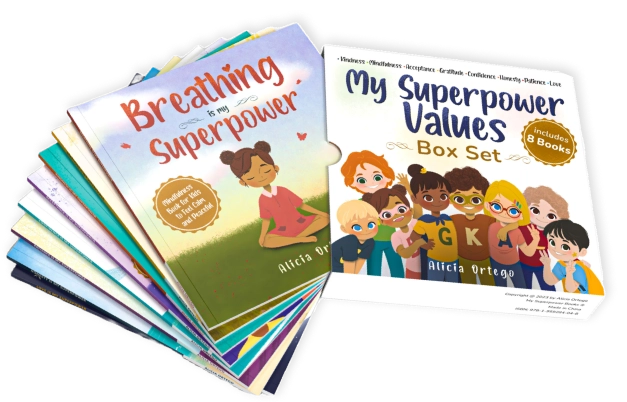
Breathing Is My Superpower is a natural example here. If your child has been learning about calm-down strategies, or is going through a particularly anxious patch, connecting the book to that real-life experience makes the story feel genuinely relevant rather than assigned.
10. Read Together
Reading the same book as your child — even if you’re both reading separately — creates a shared experience that is socially motivating. You can talk about what’s happening, share predictions, argue about characters, and laugh at the same moments.
This works especially well for children who are socially motivated. The book becomes a conversation, not a solo task.
11. Introduce Audiobooks Alongside Print
Audiobooks are not cheating. They are reading in a different format, and for many children — especially those who are auditory learners or who struggle with decoding — audiobooks are the bridge that gets them into stories they’d never access alone.
Let children listen to an audiobook while following along with the physical copy. The combination supports vocabulary, comprehension, and fluency simultaneously.
12. Visit the Library Regularly
The library is free, endlessly stocked, and carries none of the pressure of a bookstore purchase. There’s no risk in picking something disappointing, because you can simply return it and try something else.
Make library visits a regular outing — not a special occasion, but an ordinary errand like the grocery store. Children who grow up treating the library as a normal, comfortable place develop a different relationship with books than those who only encounter them in school.
13. Use Reading Challenges and Book Bingo
External structure helps some children — particularly those who are goal-oriented or competitive. Reading challenges (read a book with a blue cover, read a book that was published before you were born, read a nonfiction book about an animal) turn the reading selection process into a game.
Many public libraries run summer reading challenges that offer small prizes or certificates. These are worth participating in not for the prizes themselves, but for the structured motivation they provide across the holiday months when reading habits often slip.
14. Connect Books to Emotions
Children who learn to see books as a way to understand their own feelings develop an intrinsic motivation to read that external rewards can never match.
When your child is angry, sad, nervous, or overwhelmed, showing them that there’s a book character who felt the same way — and got through it — is quietly powerful. It teaches them that books hold something useful, not just stories.
The My Superpower series is built around exactly this connection. Books like Kindness Is My Superpower, Gratitude Is My Superpower, and Acceptance Is My Superpower give children language for their emotional experiences and characters who navigate the same feelings they face every day. When a child sees their inner world reflected in a story, reading stops feeling like an external task and starts feeling like something that belongs to them.
15. Model Reading Yourself
Children learn what they live with. If the adults in their home read — visibly, regularly, and for obvious enjoyment — children absorb the message that reading is what interesting people do.
You don’t need to read for hours. Fifteen minutes of your own book on the sofa, while your child reads nearby, sends a clearer message than any amount of encouragement or instruction. Let them catch you reading.
Motivating Reluctant Readers
Featured Snippet: How do I motivate my child to read?
The most effective way to motivate a child to read is to remove pressure, offer genuine choice, and find a book that connects to something they already love. Read aloud together, celebrate small wins, and make reading a daily ritual rather than a performance or a test. Consistency and warmth build reading motivation faster than rewards or rules.
Reluctant readers need a different approach from children who are simply uninterested. If your child actively resists or dreads reading, the goal first is to change the emotional association — not to improve skills.
Start by removing all performance pressure for at least a few weeks. No comprehension questions, no “how many pages did you read,” no comparisons. Just reading, together, with no strings attached.
Then find the one topic that makes their eyes light up. Animals, sport, video games, cooking, true crime for older readers, jokes and riddles for younger ones — anything. Find a book on that topic and put it in front of them without expectation.
For children who resist fiction entirely, nonfiction and fact books count. Graphic novels count. Activity books count. The habit matters right now, not the format.
For children whose reluctance comes from actual reading difficulties rather than motivation, the struggling readers guide covers the additional support strategies they may need.
Common Motivation Mistakes Parents Make
Rewarding reading with screen time. This accidentally communicates that reading is an unpleasant duty and screens are the real prize. If you use rewards, use book-related ones: a new book, a bookmark, a visit to the bookstore.
Choosing books above their level to “challenge” them. A child who struggles through every page isn’t motivated by the challenge — they’re exhausted by it. Motivated readers build speed and confidence on books they can actually read.
Turning every reading session into a comprehension check. Asking “what happened? who were the characters? what was the theme?” after every session teaches children that reading is a test. Ask one curious question instead: “what was your favorite part?”
Giving up after one bad book. One book that didn’t land is information, not failure. The next pick should simply shift in a different direction.
Reading only at bedtime when children are tired. Bedtime reading is lovely for connection, but it’s not ideal for building real engagement. A tired child associates books with sleepiness, not excitement. Try a daytime reading window too.
Making it competitive. Comparing how much your child reads to a sibling, a classmate, or a chart on the fridge tends to create shame rather than motivation — especially in children who are already behind.
Building Lifelong Reading Habits
The goal isn’t a child who reads because you told them to. The goal is a child who reads because they want to — because they’ve discovered that books give them something valuable.
That discovery takes time and the right conditions. It rarely happens through pressure. It almost always happens through positive early experiences: a book that made them laugh, a character who felt like a friend, a story that explained something confusing about the world, a parent who read aloud with obvious pleasure.
Your job is to create those conditions as often as possible, and to get out of the way when the spark starts.
A few habits that make a lasting difference:
Keep a small shelf of books your child genuinely loves — not a library of aspirational titles, but books they’ve actually enjoyed and might return to. A child who has books they already love is a child who already has a reading identity.
Normalize rereading. Children who reread favorites aren’t wasting time — they’re consolidating love. The child who reads Kindness Is My Superpower for the fourth time is building a relationship with a story, not avoiding new material.
Talk about books the way you’d talk about a film or a show. “I read something interesting today” or “you would love this character” treats reading as a normal part of adult life, which it should be.
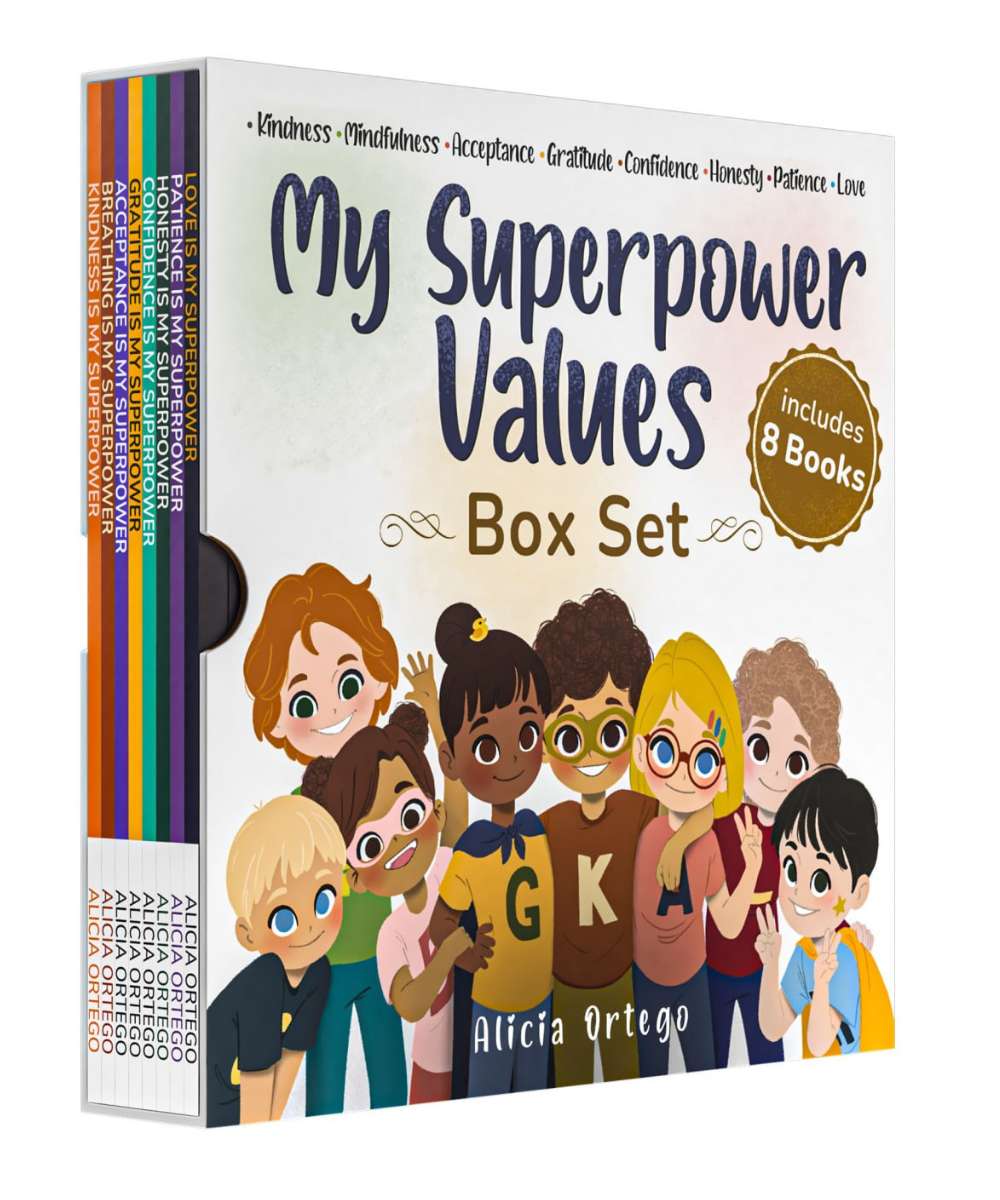
The My Superpower Values Box Set is a practical starting point for a home shelf that works — eight books covering kindness, gratitude, acceptance, breathing, listening, confidence, and more, at a reading level that’s genuinely accessible, and on themes children find meaningful. For many families, it’s the collection that finally makes reading feel like something worth coming back to.
FAQ
How can I motivate my child to read?
Start by removing pressure and offering real choice. Let your child choose what to read, even if it’s not what you’d pick. Match books to their existing interests, build a consistent reading ritual, and read alongside them. Motivation grows from positive experiences with books — not from rules, rewards, or requirements.
What causes children to dislike reading?
Most children who dislike reading have had one or more negative experiences with it: being pushed before they were ready, embarrassed during read-alouds, given books that didn’t match their personality, or simply never finding a book they genuinely loved. The dislike is usually specific and fixable, not permanent.
How do you make reading fun for kids?
Take the evaluation out of it. Let them choose the book, read in a comfortable place, stop when they want to stop, and reread favorites as often as they like. Add audiobooks, graphic novels, or nonfiction if traditional chapter books don’t work. Make reading something that happens alongside people they love, not in isolation under pressure.
What are the best reading motivation techniques?
Choice, interest-matching, reading aloud together, series books, and consistent daily rituals are consistently the most effective techniques across different ages and reading personalities. The techniques that don’t work are those that add pressure, comparison, or performance to the experience.
How can I encourage reluctant readers?
Remove performance pressure entirely for a few weeks. Find the one topic that genuinely excites your child and find a book on that topic. Accept any format — graphic novels, nonfiction, audiobooks, joke books. Read alongside them without checking comprehension. Celebrate the fact that they read, not how much or how well.
Should children be rewarded for reading?
Small acknowledgments and celebrations can work well, especially for goal-oriented children. The key is to avoid making the reward the point — if screen time or sweets become the prize for reading, children learn that reading is a chore to get through. Book-related rewards (a new book, a trip to the bookstore, a special bookmark) keep the focus on reading itself. The most powerful motivator long-term is intrinsic: a child who loves reading for what it gives them.
Final Thoughts
Reading motivation isn’t a single strategy. It’s a hundred small choices, made consistently, that together create a child who reaches for books because they want to.
Some techniques will click immediately. Others will take weeks to show results. The ones that feel most natural to your family are probably the ones worth staying with.
If you’re not sure where to start, start with choice: let your child pick the next book without any guidance from you. Watch what they reach for. That choice will tell you more about how to help them than any quiz or checklist could.
And if you’re still figuring out which books to offer in the first place, the guide to choosing books by personality type is the natural next step — because motivation and the right match go hand in hand.
More articles
Creating a healthier rhythm between screens, play, and rest
It is five o’clock, homework is finished, and your child asks for the tablet. The device has already been used for school, but a favorite game or video may also be how your child relaxes at the end of a long day. Moments like this can make screen decisions feel more complicated than they need […]
Family Reading Night Ideas: 40 Fun Activities for Schools and Families
Family Reading Night is one of the simplest ways a school can turn reading from a homework chore into something a whole family looks forward to. When it’s done well, kids see their parents excited about books, parents see how their children read and think, and teachers get a rare evening where the whole community […]
How Art Activities Help Kids Build Confidence
Every parent has watched their child hesitate before trying something new. Maybe it was raising a hand in class, joining a game at the playground, or simply saying hello to another kid. Confidence is not something children are born with. It is a skill they build, one small success at a time. And few places […]