The Calm, Prepared Parent: Why CPR Training Belongs Beside Emotional Intelligence Lessons

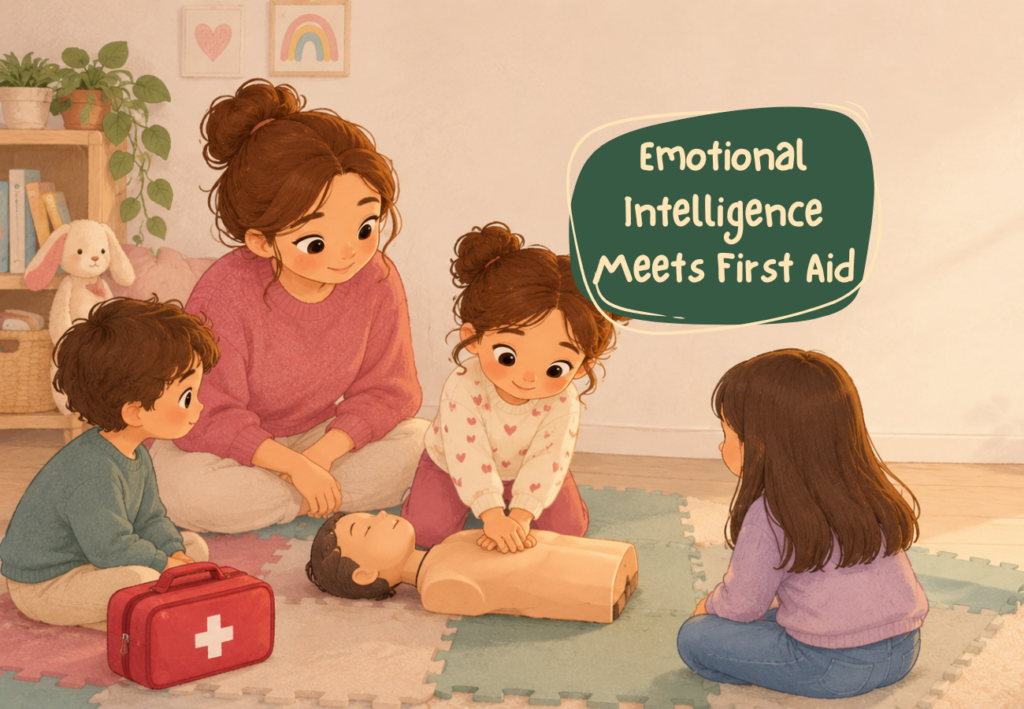
My daughter once told me her feelings were “too big for her body.” She was four, fresh off a picture book that teaches kids to name what they feel instead of melting down. It’s a lovely lesson for parents, teachers, and daycare providers to pass along. But here’s the question that stopped me cold: if she can name “worry,” does she know what to do if I ever collapsed in front of her? That thought sent me searching CPR classes near me, and it changed how I think about teaching kids, and the adults who care for them, to handle big moments.
Key Takeaways
- Kids who learn to name big feelings have a head start noticing when something is physically wrong, too.
- Simple steps, like calling 911 or pressing gently on a cut, can be taught alongside emotional check-ins.
- Quick bystander CPR can improve someone’s odds before paramedics arrive, per Heart & Stroke.
- Ontario educators and childcare providers are often expected to keep certifications current.
- Modeling calm, prepared behavior teaches kids more than any single conversation.
What If Emotional Intelligence Included Emergency Skills Too?
Picture books that teach emotional intelligence give kids a script for chaos: name the feeling, take a breath, ask for help, try again. That script doesn’t disappear the moment a scraped knee turns into real blood or a grandparent looks unwell.
Staying calm, following a simple sequence, and knowing when to call an adult are the same skills, just pointed at a different kind of “big feeling.” Kids who already notice what’s happening in their bodies have a head start on noticing when something is wrong around them, too.
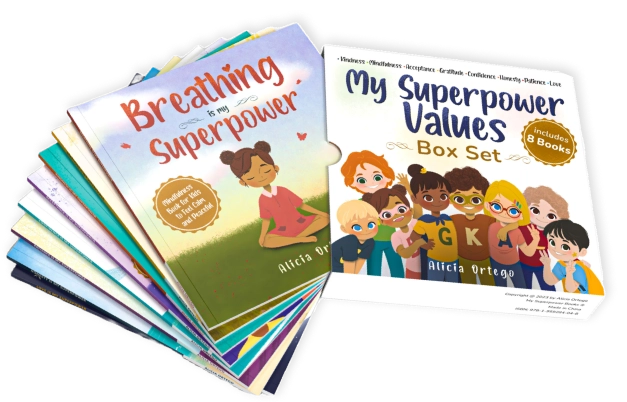
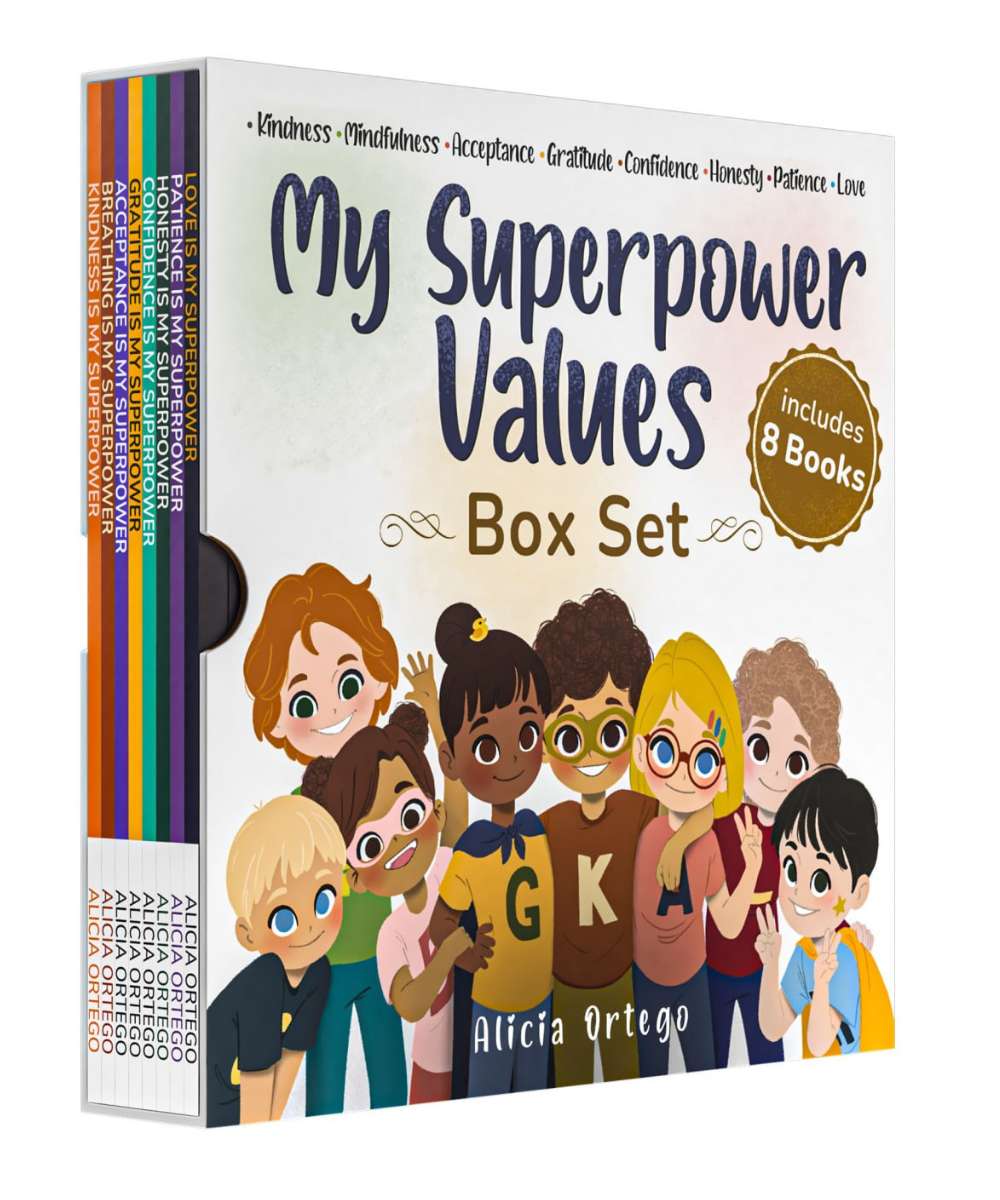
It’s the same idea behind our own My Superpower Skills box set (currently open for preorder). Titles like Focus Is My Superpower and Listening Is My Superpower aren’t just about feelings in the abstract — they build the exact soft skills a first aid moment actually calls on. A child who has practiced staying focused under a picture book’s gentle prompts is more likely to stay on task while pressing a cloth to a cut instead of freezing. A child who has practiced listening is more likely to actually follow an adult’s instructions, or a 911 operator’s, when it counts. The soft skill is what makes the hard skill usable in the moment.
Why Should Parents and Educators Learn Basic Emergency Response?
It’s tempting to assume this is only a workplace topic. It isn’t. The Canadian Red Cross has long taught that even young children can learn simple actions such as calling for help, staying with an injured person, and applying gentle pressure to a cut. Heart & Stroke notes that bystanders who act quickly during a cardiac emergency can meaningfully improve someone’s odds before paramedics arrive.
For teachers, daycare staff, and nannies, this isn’t abstract. You’re often the only adult in the room, and giving kids, and yourself, a clear job beats leaving everyone frozen.
What Does “Kid-Sized” First Aid Actually Look Like at Home?
You don’t need a manual to start. Knowing a full home address, understanding that 911 is for real emergencies, practicing “stop, drop, and roll” like a fire drill, and pressing a cloth on a cut while calling an adult all fit beside the emotional coaching already happening at bedtime.
You’re not adding a subject to a busy week. You’re widening one your child, or your students, already understands.
How Can Oshawa Parents and Educators Build This Confidence?
Suburban families around Oshawa already juggle hockey practice, swim lessons, and school pickup with real precision. Adding a first aid conversation to that routine isn’t one more thing. It’s a small upgrade to the safety net already in place.
Community sports and after-school programs are a great starting point. Ask what coaches know and what they’d do before help arrives. Many parents and educators eventually take a course themselves, both for confidence and to set an example. You can compare course formats at https://www.c2cfirstaidaquatics.com/ before choosing one.
What Should Caregivers Know About Ontario’s Certification Standards?
If you work in childcare, coaching, or any role touching young people in Ontario, this is worth taking seriously. Ontario’s Occupational Health and Safety Act sets expectations for workplace first aid readiness, and employers often follow WSIB guidance on keeping certification current. For parents, the same standard makes a useful benchmark, even without a formal job requirement.
Being the calm adult who knows the next three steps is a quiet kind of leadership kids notice. A parent who says “I’m renewing my certification this month” teaches a different lesson than one who only talks about being prepared.
How Do You Turn This Into a Family and Classroom Habit?
Emotional skills stick because they get repeated, not explained once. Revisit the plan every few months like a fire drill, and ask your child or students what they’d do if a sibling fell off a bike or a classmate got hurt at recess.
Praise the process, not just the outcome, even when the answer is imperfect. Keep the tone matter-of-fact rather than frightening. Over time, this becomes a shared value at home and in the classroom: we notice big feelings, big problems, and know what to do about both.
About Coast2Coast First Aid & Aquatics
Coast2Coast First Aid & Aquatics was founded in Toronto in 2014 and holds the Top 3 Canadian Red Cross Training Partner distinction for 2023, 2024, and 2025, plus Heart & Stroke accreditation. More than 150,000 students have been certified, with a 99.9% success rate across 30-plus locations in Canada and the United States. Students get a digital certificate within 48 hours, plus a free 90-day skills practice retake.
If you’re looking for family-friendly first aid and CPR training near Simcoe Street South, King Street, or the area close to Durham College and Ontario Tech University, local parents and educators may reach out to the Oshawa training team introduced above.
FAQs
At what age can kids start learning basic first aid? Most educators suggest around age four or five, with simple concepts like knowing a home address or understanding that 911 is for emergencies only. Hands-on skills come later, as fine motor skills develop.
Will teaching kids about emergencies scare them? Not if it’s framed calmly, the same way fire drills are taught at school. Kids feel more secure once they know they have a job to do rather than nothing to do.
Do parents or teachers need formal certification to teach kids this way? No. Simple conversation and practice at home or in the classroom go a long way. That said, many caregivers take a certified course themselves to model accurate techniques.
How does this connect to what Ontario expects from childcare and coaching roles? Ontario’s Occupational Health and Safety Act sets baseline expectations for first aid readiness, and employers often follow WSIB guidance to keep certifications current.
What’s the easiest first step for a busy family or classroom? Start with one skill, like reciting a full home address, and build from there. Small, repeated practice beats one long lecture.
More articles
Creating a healthier rhythm between screens, play, and rest
It is five o’clock, homework is finished, and your child asks for the tablet. The device has already been used for school, but a favorite game or video may also be how your child relaxes at the end of a long day. Moments like this can make screen decisions feel more complicated than they need […]
Family Reading Night Ideas: 40 Fun Activities for Schools and Families
Family Reading Night is one of the simplest ways a school can turn reading from a homework chore into something a whole family looks forward to. When it’s done well, kids see their parents excited about books, parents see how their children read and think, and teachers get a rare evening where the whole community […]
How Art Activities Help Kids Build Confidence
Every parent has watched their child hesitate before trying something new. Maybe it was raising a hand in class, joining a game at the playground, or simply saying hello to another kid. Confidence is not something children are born with. It is a skill they build, one small success at a time. And few places […]