50 Creative Reading Rewards Ideas That Motivate Kids to Love Books

Every parent and teacher of a reluctant reader has wondered the same thing: should I reward my child for reading? If rewards are done badly, they turn books into a chore you get paid for. However, when they are done well, they give kids the push they need until reading becomes its own reward.
This guide shares 50 reading rewards ideas that keep the focus on books, from a reading picnic to a mystery reader in the classroom. In addition, you will find what research says about reading motivation, the rewards to avoid and a free printable reading reward chart.
What are good reading rewards?
Good reading rewards are small, book-related and celebrate effort, such as a new book, an extra bedtime story, a library or bookstore trip, a reading picnic or the chance to choose the next family read-aloud. The best reading rewards point children back toward reading instead of replacing it with candy, money or toys.
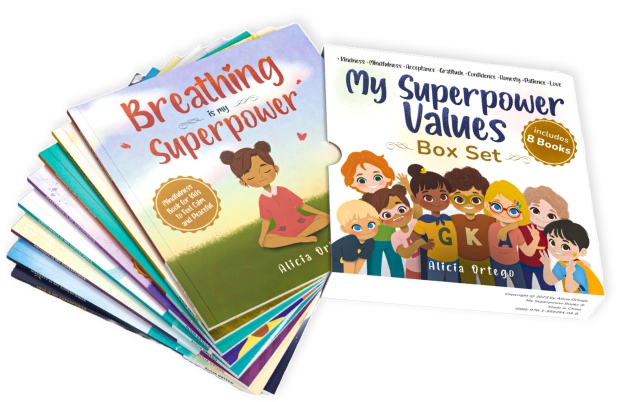
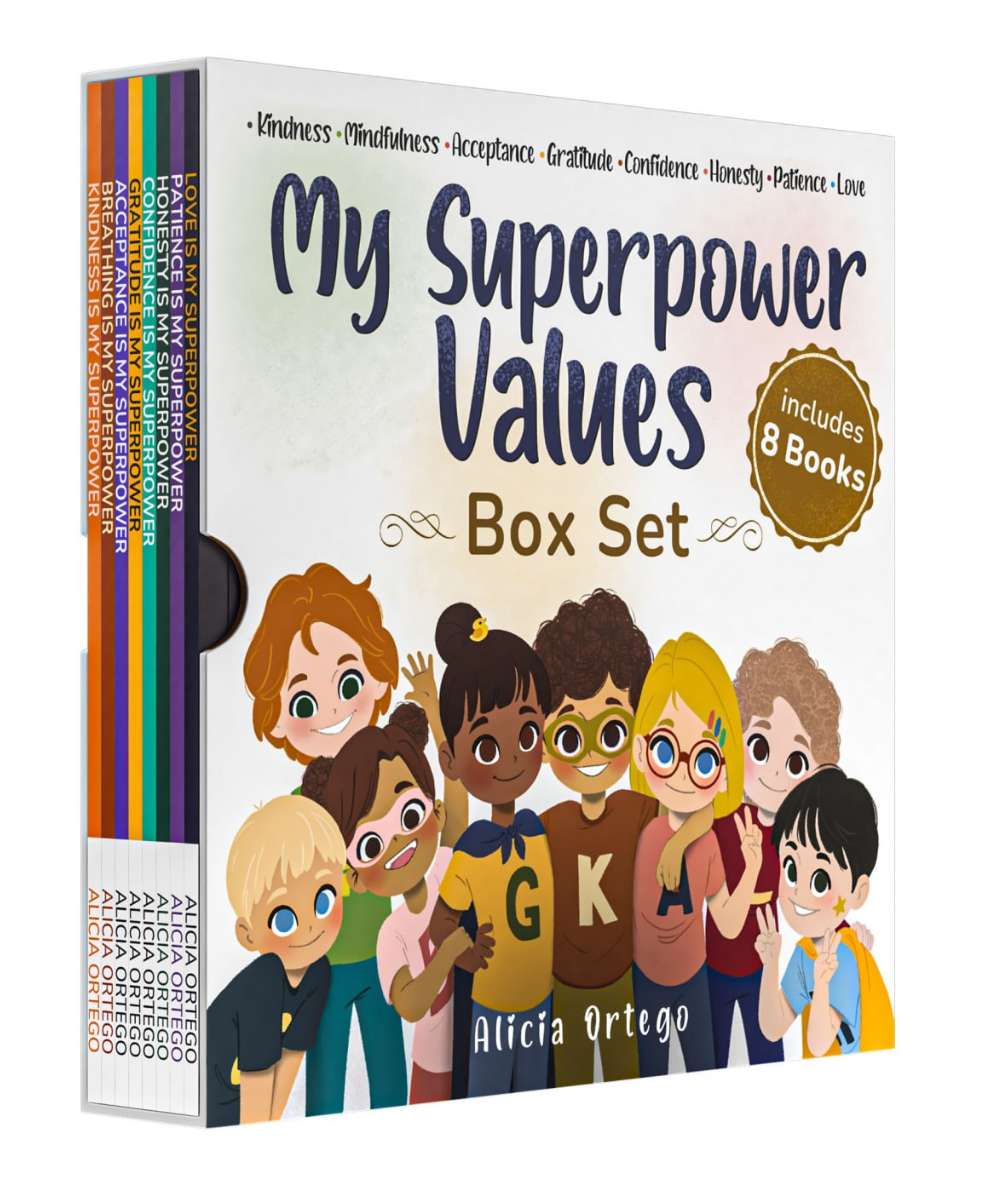
Looking for a reward that is also a book? Alicia Ortego’s My Superpower books make ideal “next book” prizes. Also, our free printables include reward charts and trackers ready to print.
Do Reading Rewards Work?
Reading rewards work when they are small, connected to books and used to build a habit, not to buy it. On the other hand, they backfire when they become the only reason a child reads.
Research overview
Researchers have argued about rewards for decades. For example, classic psychology experiments in the 1970s found that children who were promised a prize for an activity they already enjoyed later spent less free time on it. Later, a large 1999 meta-analysis by Deci, Koestner and Ryan confirmed the pattern: expected, tangible rewards tend to weaken interest in tasks people already find enjoyable.
However, reading research adds an important twist. Literacy researcher Linda Gambrell proposed the “reward proximity” idea: rewards closely tied to reading, such as books or extra reading time, support reading motivation, while unrelated rewards do not. In other words, a book is a better prize than a cookie.
Intrinsic vs extrinsic motivation
Intrinsic motivation means reading because it is interesting, funny or satisfying. In contrast, extrinsic motivation means reading to get something else, such as a sticker, a grade or a prize. Above all, lifelong readers run on intrinsic motivation.
Still, extrinsic rewards are not all bad. For instance, a reluctant reader who has never experienced the pleasure of a good book may need a reward as a bridge into the story. Then, once they start enjoying it, the goal is to walk across that bridge and leave it behind.
Best practices
- Reward effort and habits, not speed. For example, celebrate minutes read or days in a row rather than pages raced through.
- Keep rewards book-related. Books, bookmarks, reading time and library trips all work, because they lead back to reading.
- Make some rewards surprises. In fact, unexpected celebrations are less likely to reduce interest than promised prizes.
- Use rewards for milestones, not every book. A reward after five books feels special; however, a reward after every page feels like a wage.
- Fade rewards over time. As reading becomes a habit, gradually shift from prizes to praise and shared experiences.
- Talk about the book, not the prize. Instead of asking about the reward, ask what made them laugh or what they think happens next.
Non-Material Reading Rewards
Non-material reading rewards cost little or nothing, so they make reading feel special rather than paid. That’s why they are the safest place to start.
Cozy reading experiences
- Choose the next family book. The child picks the next read-aloud, and then everyone has to listen.
- Extra bedtime story. Ten more minutes with the light on is one of the most powerful rewards for young kids.
- Read outside. A blanket in the garden, a park bench or a balcony turns ordinary reading into an event.
- Reading picnic. Pack snacks and a stack of books, and then spend an afternoon reading together outdoors.
- Library trip. A special visit where the child gets to choose as many books as the card allows.
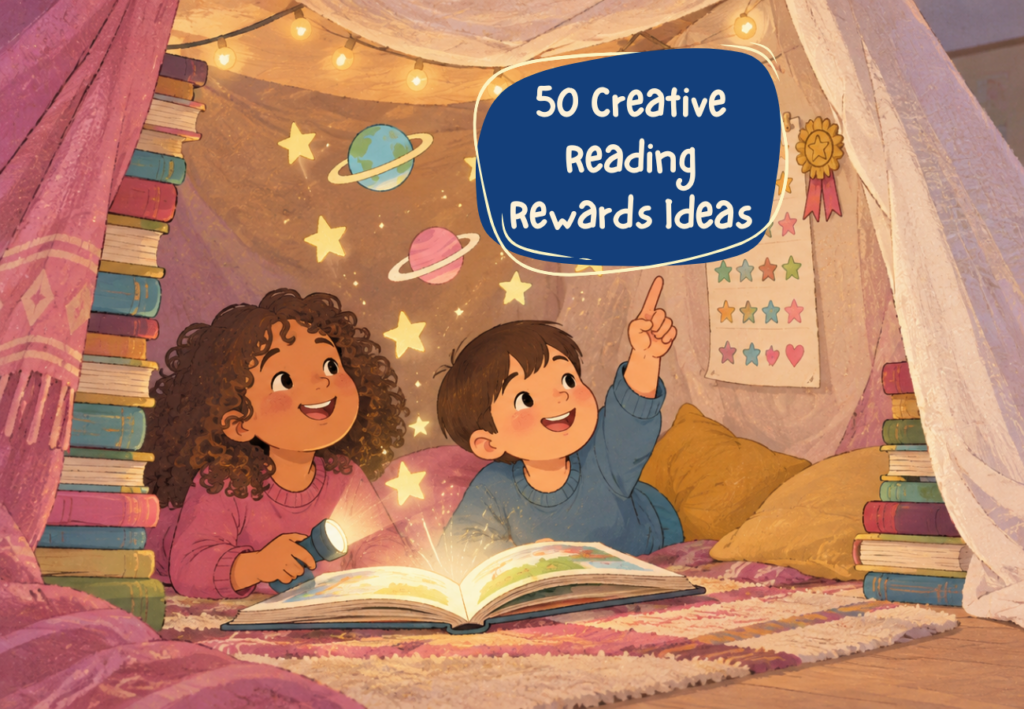
- Book fort. Build a blanket fort with pillows and a flashlight, and then read inside it.
Keepsakes and recognition
- Special reading chair. The child earns the “reader’s throne” for a week, because it is the comfiest seat in the house or classroom.
- Bookmark collection. A new bookmark at each milestone. Plus, kids can design their own on card stock.
- Reading certificate. A printed certificate with the child’s name and the goal they reached, signed by a parent or teacher.
- Author celebration. Celebrate a favorite author’s birthday with a themed reading party, costume or craft.
Special reading privileges
- Flashlight reading. Permission to read under the covers with a torch after lights out.
- Late-night reading pass. Stay up 15 minutes later on a Friday, as long as they spend it reading.
- Audiobook in the car. The child chooses the audiobook for the next family drive.
- Reading spot of choice. The child picks anywhere in the house to read, even the bathtub (without water, of course).
Sharing the story with others
- Read to the pet. A cozy session reading aloud to the dog or cat, who never corrects mistakes.
- Video-call read-aloud. The child reads a favorite book to a grandparent on a call.
- Reading buddy time. Read to a younger sibling, cousin or neighbor, and so be the “teacher.”
- Dress as a character. A day dressed as a favorite book character.
- Write to an author. Help the child write a letter or email to a favorite author.
- Star of the bookshelf. Display the child’s photo and favorite book on the family shelf for a week.
Classroom Reading Rewards
The best reading rewards for classrooms celebrate the whole class as well as individuals, so struggling readers are not left behind. Best of all, these reading incentives for elementary students cost almost nothing.
Whole-class rewards
- Reading wall. Every finished book becomes a paper leaf, fish or brick on a growing classroom display.
- Reading leaderboard (team-based). Track minutes by table groups or teams, not individuals, so that everyone contributes.
- Class reading challenge. If the class reads 1,000 books by spring, then everyone gets a pajama reading day.
- Mystery reader. A parent, principal or local guest visits secretly to read aloud. Meanwhile, clues during the week build excitement.
- Extra free-reading time. Ten minutes of free choice reading for the whole class.
- Classroom book swap. Students trade a book they have finished for a new one to keep.
- Reading Olympics medals. Gold, silver and bronze levels by minutes read, so every child can medal.
Individual student rewards
- Book badges. Kids earn paper or digital badges for milestones, for example First Chapter Book, Mystery Solver or Poetry Explorer.
- Reading passports. Each genre or country read earns a stamp. Finally, a full passport earns a class celebration.
- Book recommendation board. Students who finish a book post a short review card for classmates. In fact, seeing your recommendation picked is a reward in itself.
- Read to the principal. A student reads a favorite page to the principal and then gets a special note home.
- Book raffle tickets. Each reading milestone earns a ticket for a monthly draw of new books.
- Teacher’s chair. The student reads aloud to the class from the teacher’s chair.
- Lunch bunch book club. A small group eats lunch with the teacher and talks about a book.
- Pick the class read-aloud. The student chooses the next chapter book the teacher reads.
Reading Rewards for Home
At home, the strongest reading motivation for kids comes from time with you. As a result, these reading rewards turn a goal into a family moment.
Family time rewards
- Movie night. Finish a book that has a film version, then watch it together and compare.
- Family game night. The reader picks the game, especially a word or story game.
- One-on-one reading date. Time alone with a parent at a café or library, with no siblings and no phones.
- Choose dinner. The reader picks the menu, or alternatively a meal inspired by a book they read.
- Reading sleepover. Siblings or cousins camp in one room with flashlights and books.
- Book-themed day trip. For example, visit a zoo after an animal book, a museum after a dinosaur book or a farm after a farm story.
- Story-time switch. This time, the child reads the bedtime story to the parent.
- Family Reading Night. Celebrate a big goal with a themed evening. For ideas, see our Family Reading Night ideas.
Creative and book-based rewards
- Visit a bookstore. The child chooses one new book to keep, because a book is the ideal book reward.
- Create your own story. Make a homemade book together: first the child writes or dictates, then illustrates.
- Bake from a book. Recreate a treat from a story, such as pancakes, porridge or a birthday cake.
- Personalized bookplate. A sticker with “From the library of [name]” for their own books.
- New reading light or pillow. A small upgrade to their reading nook.
- Subscribe to a kids’ magazine. That way, something new to read arrives every month.
- Earn the next book in a series. Finishing one book unlocks the next, so the reward stays inside the reading.
Reading rewards by age
| Age | Rewards that work best | Milestone frequency |
|---|---|---|
| 3–5 (preschool, kindergarten) | Extra bedtime story, stickers, book fort, reading to a pet | Every 3–5 books |
| 6–7 (1st–2nd grade) | Choose the next book, bookmark, certificate, library trip | Every 5–10 books |
| 8–9 (3rd grade) | Bookstore visit, reading date, badges, movie night | Every 5 books or 2 weeks |
| 10–11 (upper elementary) | Late-night reading pass, series unlock, book club, magazine | Monthly or per big goal |
Reading Reward Chart
A reading reward chart is the simplest reading reward system, because kids see their progress grow while the reward waits at the end of the path. Our free printable comes in three versions, so you can match it to your child.
Free printable
Download Reading Reward Chart (PDF)
Each version has a reward space where you and your child write the prize together before starting. As a result, agreeing on the reward upfront keeps it fair and keeps the focus on the goal.
Sticker chart
Best for ages 3–6. A path of 20 circles leads to a treasure chest, and the child adds one sticker per book or per 10 minutes of reading. Small hands love peeling stickers. Besides, the path shows exactly how close the reward is.
Book tracker
Best for ages 7 and up. A bookshelf of 25 empty spines, where kids write the title on each spine and then color it in when they finish. In addition, milestone stars at books 5, 10, 15, 20 and 25 mark reward points. Older kids can also add a star rating, which turns the tracker into a reading log.
Finally, pair the chart with a clear reading goal. Our guide to reading goals for kids has 50 age-by-age goals and challenges to choose from.
Rewards to Avoid
Some reading prizes do more harm than good, because they teach kids that reading is something unpleasant you get paid to do.
| Reward | Why it backfires | Better swap |
|---|---|---|
| Candy | Links reading to sugar and makes the treat the point | Reading picnic with a favorite snack |
| Money | Turns reading into a job; kids may stop when the pay stops | Bookstore gift card the child spends on books |
| Expensive toys | Raises the stakes, so the next reward has to be bigger | A new book or bookmark |
| Competition-only systems | Struggling readers give up when they can never win | Team goals and personal-best charts |
For example, a leaderboard where the same three fast readers always win sends a clear message to everyone else: reading is not for you. Therefore, if you use competition, compare children to their own past results or let teams pool their minutes.
Research Behind Reading Motivation
Research on reading motivation keeps returning to four drivers. That’s why rewards work best when they strengthen these drivers rather than replace them.
Choice
Children read more when they choose what to read. For instance, large surveys of families, such as Scholastic’s Kids & Family Reading Report, consistently find that most children say their favorite books are ones they picked themselves. So let kids choose, even if the choice is a comic, a joke book or the same dinosaur book for the tenth time.
Autonomy
Autonomy is a sense of control. Self-determination theory, developed by psychologists Edward Deci and Richard Ryan, shows that people stay motivated when they feel ownership of what they do. In reading, this means kids help set their own goals, choose where and when they read and also decide what reward to work toward.
Mastery
Kids keep doing things they feel good at. Books that are too hard drain motivation; on the other hand, books that are just right build it. Similarly, visible progress, such as a filled-in chart or a reading stamina timer that keeps growing, gives children evidence that they are getting better.
Reading enjoyment
Above all, enjoyment is the end goal of every reward. The UK’s National Literacy Trust has repeatedly found a strong link between children who enjoy reading and children who read well. For this reason, the best rewards are shared, happy experiences with books, such as a read-aloud, a reading picnic or a trip to the library, rather than prizes that compete with them.
FAQs
Should kids get rewards for reading?
Yes, in moderation. Small, book-related rewards can help reluctant readers build a habit. However, avoid paying for every page, use rewards for milestones and fade them out once your child reads for fun.
What rewards work best?
The best reading rewards are connected to books or shared time: a new book, a library or bookstore trip, an extra bedtime story, choosing the next family read-aloud or a reading picnic. In other words, they celebrate reading without competing with it.
How do you motivate reluctant readers?
First, let them choose their own books, including comics, graphic novels and nonfiction. Then start with short, achievable goals, read aloud together and make reading cozy rather than a test. In addition, small rewards for early milestones can help them get started.
What age should reading rewards begin?
Simple rewards like stickers and extra stories work from about age 3. Later, formal reward charts and challenges suit ages 5–10. By upper elementary, however, most kids respond better to privileges and social rewards, such as book clubs and recommending books, than to prizes.
What is a good reading reward system for the classroom?
A good classroom reading reward system rewards effort and team progress, not just the fastest readers. For example, combine a class goal, such as a reading wall, with individual badges or passports so that every student can succeed.
Are books good rewards for kids?
Yes. Books are one of the best rewards for reading, because they keep the child inside the habit. Moreover, letting kids choose the book makes the reward even stronger.
How often should you give reading rewards?
For young children, every 3–5 books. For older children, every two weeks or at the end of a bigger goal. Also, unexpected rewards now and then keep things fun.
When should you stop giving reading rewards?
Start fading rewards once your child reads without being asked. After that, replace prizes with praise, conversation about books and special reading time together.
Turn Every Reading Goal Into a New Story
The most powerful reading reward is simply the next great book. So set a reading milestone with your child, such as five books, two weeks of daily reading or a full Bingo card, and let them earn a new title when they reach it.
Alicia Ortego’s My Superpower books work especially well for this. Each short, rhyming story explores a superpower like positivity, perseverance, making good choices or listening. As a result, every reward is also a conversation starter. Begin with I Can Enjoy Reading!, and then let your child choose which superpower to unlock next.
Print the free reward chart, pick a goal from our reading goals for kids guide and plan a Family Reading Night to celebrate the finish line.
More articles
Reading Goals for Kids: 50 Fun Reading Challenges to Build Lifelong Readers
“Read more” is the most common reading advice a child hears, and the least useful. It has no starting point, no finish line and no moment where anyone gets to say “you did it.” A reading goal fixes that. It turns a vague wish into something a child can picture, count and celebrate. This guide […]
Top Math Apps for Kids: A Practical 2026 Guide for Parents and Educators
Finding a good math app for your child sounds simple until you actually start looking. Some apps are little more than worksheets dressed up with cartoons and rewards. Others are entertaining games where the educational part feels like an afterthought. The best math apps for kids sit somewhere in the middle: children genuinely want to […]
The Calm, Prepared Parent: Why CPR Training Belongs Beside Emotional Intelligence Lessons
My daughter once told me her feelings were “too big for her body.” She was four, fresh off a picture book that teaches kids to name what they feel instead of melting down. It’s a lovely lesson for parents, teachers, and daycare providers to pass along. But here’s the question that stopped me cold: if […]